



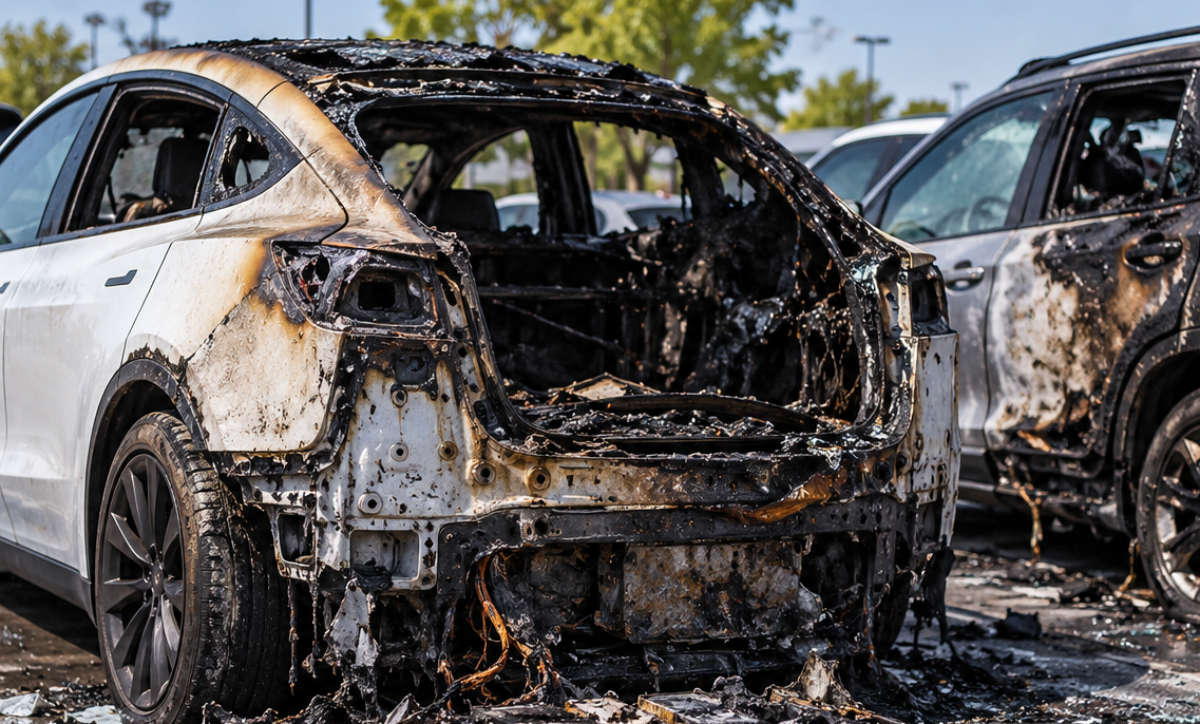
Electric vehicle battery fires can cause devastating burn injuries, particularly after a collision damages a lithium-ion battery pack. Depending on how the fire started, liability may extend beyond the driver who caused the crash. An EV manufacturer, battery manufacturer, repair facility, charging equipment company, or another negligent party could potentially share responsibility. Determining who is liable requires investigating both the collision and the battery failure that followed it. We’ll cover everything you need to know in the article below.
Have you sustained burn injuries caused by an EV lithium-ion battery fire? Reach out to a burn injury attorney at Hauptman, O’Brien, Wolf & Lathrop, LLC. We help injured people throughout Nebraska and Iowa pursue compensation after serious motor vehicle accidents and catastrophic injuries. Call us today at (402) 241-5020 or contact us online for a free consultation.
Why Can Lithium-Ion Batteries Catch Fire After an EV Accident?
An electric vehicle contains a high-voltage battery pack made up of numerous interconnected cells. These systems are designed with safeguards, but a severe impact can crush, puncture, or otherwise damage individual cells or electrical components. The resulting internal short circuit may generate enough heat to affect neighboring cells, creating a chain reaction commonly called thermal runaway.
Importantly, a battery fire does not always begin immediately after impact. NHTSA warns that physical damage to an EV or its high-voltage battery can result in an immediate or delayed release of toxic or flammable gases and fire. That means an apparently controlled accident scene can still present risks during vehicle recovery, towing, and storage.
NHTSA maintains vehicle-specific emergency response guides covering fires, towing, storage, submersion, and other EV hazards, which reflects how differently these vehicles may need to be handled after serious damage.
Who May Be Liable for an EV Battery Fire?
There is no single answer to liability because two separate events may have contributed to the injury. One party may have caused the collision, while another party’s defective product or negligent work may have caused the battery to ignite or made the resulting fire more dangerous.
Depending on the evidence, potentially responsible parties may include:
- Negligent drivers: A driver who causes a collision may be liable for resulting injuries, including burns caused by the crash.
- EV manufacturers: An automaker may face liability when a defective vehicle or battery system contributes to a fire.
- Battery or component manufacturers: Defective cells, electrical components, separators, cooling systems, or other parts may contribute to thermal failure.
- Repair facilities: Improper battery repairs, installation, diagnostics, or collision repairs could create or worsen a dangerous condition.
- Charging equipment manufacturers: Defective charging equipment or related electrical components may contribute to some battery fire incidents.
- Commercial vehicle owners: Employers or fleet operators may potentially bear responsibility when their vehicles or drivers contribute to an accident.
Identifying every responsible party matters because serious burn cases can involve substantial medical expenses and long-term losses.
When Can an EV Manufacturer or Battery Manufacturer Be Held Liable?
A battery fire may support a product liability claim when a defect in the EV, battery pack, or one of its components caused or contributed to the injuries. These cases require more than showing that a battery caught fire. Our attorneys may need to establish what failed, why it failed, and how that failure contributed to the victim’s burns.
Nebraska law specifically defines product liability actions to include claims involving defective manufacture, construction, design, assembly, testing, packaging, labeling, or a failure to warn about product hazards. Depending on the circumstances, an EV case could involve:
- Design defects: The battery pack or protective structure may have been unreasonably vulnerable to foreseeable collision forces.
- Manufacturing defects: A particular battery, cell, or component may have departed from its intended specifications.
- Failure to warn: Instructions or warnings may have inadequately addressed known battery hazards.
- Defective components: A problem may originate with a component supplied by a company other than the automaker.
Determining which theory applies generally requires technical investigation and expert analysis.
What Evidence Can Establish Liability After an EV Battery Fire?
The burned vehicle itself can become one of the most important pieces of evidence in the case. Investigators may need to determine where the fire originated, whether the battery pack was penetrated during the collision, how quickly heat spread, and whether an electrical or manufacturing defect contributed to ignition.
That is why preserving evidence is particularly important after an EV fire. An insurer, towing company, salvage yard, manufacturer, or other party may obtain possession of the damaged vehicle soon after the crash. If it is dismantled or destroyed before an independent inspection takes place, valuable evidence could disappear.
Our attorneys may examine photographs and video, vehicle data, battery diagnostic information, maintenance and repair records, recall information, witness statements, fire department reports, and the vehicle’s physical remains. Engineers, accident reconstruction specialists, fire investigators, or battery experts may also be necessary.
A technically complicated investigation can take time, but identifying the actual failure mechanism helps distinguish a product defect from damage caused solely by the collision.
Can Both a Negligent Driver and a Manufacturer Be Responsible?
Yes. An EV battery fire can involve multiple causes and, therefore, potentially multiple defendants.
Consider a driver who runs a red light and strikes an EV. The collision damages the EV’s battery pack, which catches fire and severely burns an occupant. The negligent driver may be responsible for causing the crash. But suppose investigators also determine that a defective battery enclosure failed during an impact it reasonably should have withstood. The manufacturer or another company involved with the defective product could potentially face a separate claim.
This distinction matters. The collision and the battery failure should not automatically be treated as one event with one cause.
Our car accident attorneys always look beyond the police report when the circumstances warrant it. We may investigate the drivers involved, the vehicle itself, its maintenance and repair history, battery components, and other available evidence to determine whether multiple parties contributed to the injuries.
How Long Do You Have to File an EV Battery Fire Claim in Nebraska or Iowa?
The filing deadline depends partly on where the accident occurred and the legal theory involved. This becomes especially important when an EV fire case combines an ordinary negligence claim against another driver with a product liability claim against a manufacturer.
Under Nebraska Revised Statute § 25-224, product liability actions generally must be commenced within four years after the injury, death, or damage occurs. The statute also contains separate statutes of repose affecting product claims, including rules tied to where a product was manufactured.
Iowa generally provides a shorter period for personal injury claims. Under Iowa Code § 614.1(2), actions founded on personal injuries generally must be brought within two years after the cause of action accrues. Iowa law also imposes a separate 15-year statute of repose on many product liability actions under § 614.1(2A), subject to statutory exceptions.
Waiting can create another problem besides legal deadlines: physical and electronic evidence may become harder to preserve. Speaking with an attorney promptly can help protect both.
What Compensation May Be Available After an EV Battery Fire?
Burn injuries can require emergency treatment, hospitalization, skin grafts, reconstructive surgery, rehabilitation, and continuing medical care. Severe burns may also cause scarring, nerve damage, limited mobility, infections, psychological trauma, or permanent disability.
A personal injury claim may seek compensation for losses such as:
- Medical expenses: Emergency care, hospitalization, surgery, rehabilitation, medication, and reasonably necessary future treatment.
- Lost income: Earnings lost while the injured person is unable to work.
- Reduced earning capacity: Compensation may address long-term limitations that interfere with the victim’s career.
- Pain and suffering: Serious burns can cause extraordinary physical pain and emotional distress.
- Scarring and disfigurement: Permanent changes in appearance may have lasting physical, professional, and psychological effects.
- Property damage: A claim may also address damage to the vehicle and other personal property.
When a battery fire results in death, surviving family members may have additional legal options through a wrongful death claim.
Contact Our Nebraska and Iowa Attorneys After an EV Battery Fire
Burn injuries can affect nearly every part of your life, from your ability to work and care for your family to your physical comfort and independence. At Hauptman, O’Brien, Wolf & Lathrop, LLC, we understand that a serious injury claim is not simply a legal file. With over 268 years of combined legal experience, we investigate complicated personal injury cases with one goal in mind: protecting our clients’ rights and futures.
Were you burned in an EV fire after a collision or suspected battery failure? Contact our attorneys to schedule a free consultation. We serve clients throughout Nebraska and Iowa from offices in Omaha, South Omaha, Bellevue, Lincoln, Council Bluffs, and Sioux City. We handle personal injury cases on a contingency basis, so attorney fees are tied to a successful recovery. Call Hauptman, O’Brien, Wolf & Lathrop today or contact us online to discuss what happened and how we can help.


