



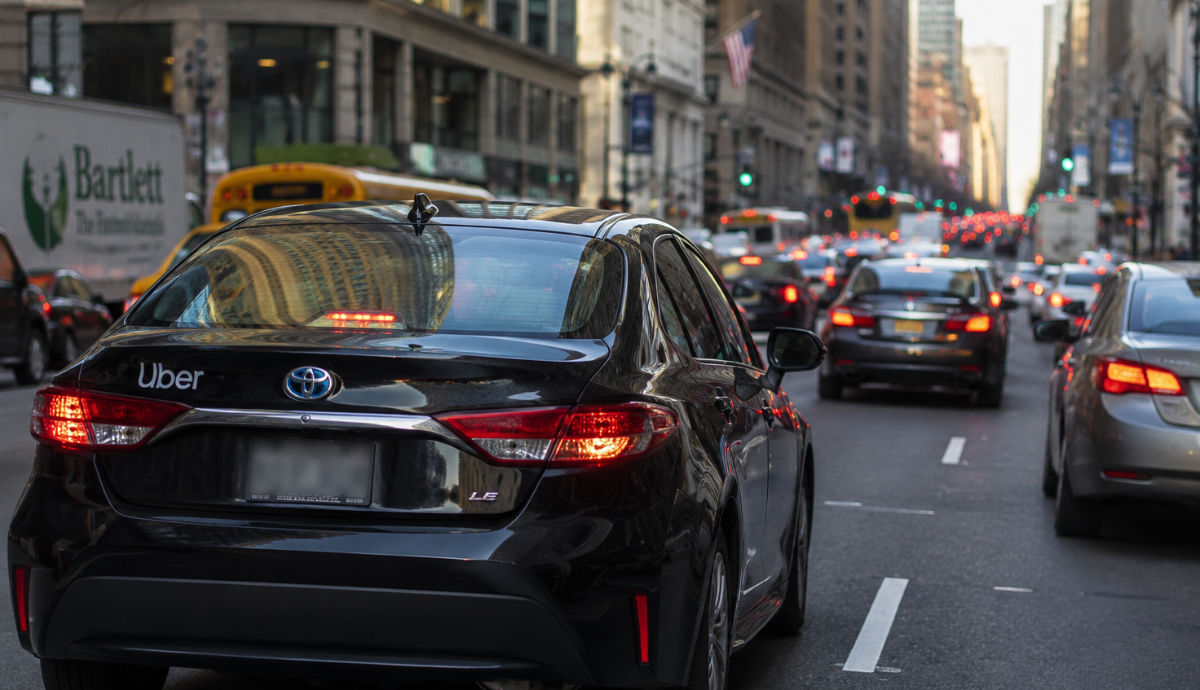
Uber’s $1 million insurance policy can provide substantial protection after a rideshare accident, but the coverage does not apply to every crash involving an Uber driver. Whether the policy applies, and which coverage is available, depends heavily on what the driver was doing in the Uber app when the collision occurred.
Generally, Uber maintains at least $1 million in third-party liability coverage after a driver has accepted a ride request and while the trip is underway. For injured passengers and other motorists, understanding those coverage periods is an important first step toward determining where compensation may come from.
Injured in an accident involving an Uber vehicle? If you’re in Nebraska or Iowa, contact a rideshare accident lawyer at Hauptman, O’Brien, Wolf & Lathrop, LLC.
When Does Uber’s $1 Million Insurance Coverage Apply?
Uber divides a driver’s activity into different stages, and insurance coverage changes with them. That distinction can become one of the most important issues after a crash.
Uber states that once a driver accepts a trip request, its rideshare insurance generally includes $1 million in third-party liability coverage while the driver travels to pick up the passenger and throughout the trip. Nebraska and Iowa laws follow a similar framework. Nebraska Revised Statute § 75-333 requires at least $1 million in primary liability coverage during the “engaged” and “passengers on board” stages. Iowa Code § 321N.4 likewise requires at least $1 million in primary automobile liability insurance while a transportation network company driver is engaged in a prearranged ride.
In practical terms, coverage may depend on the driver’s status:
- App off: The driver’s personal auto insurance generally applies rather than Uber’s rideshare policy.
- App on, waiting for a request: Limited rideshare coverage may apply.
- Ride accepted: Higher commercial rideshare coverage generally becomes available.
- Passenger in the vehicle: The $1 million liability coverage generally remains in effect through completion of the ride.
That timeline is why app and trip records can matter so much.
What Does the $1 Million Liability Policy Actually Cover?
The $1 million figure sounds straightforward, but it is not a guaranteed payment to an injured person. It is an insurance limit available for covered third-party liability when the Uber driver is legally responsible for a qualifying accident.
The coverage may potentially compensate injured parties for losses such as medical expenses, lost wages, diminished earning ability, pain and suffering, and other damages allowed by law. It may also cover property damage arising from the collision.
For example, an Uber driver accepts a passenger in Omaha or Council Bluffs and negligently runs a red light, striking another vehicle. The Uber passenger and people in the other vehicle suffer significant injuries. Because the driver was actively completing a prearranged ride, the applicable rideshare liability coverage could become an important source of compensation under either Nebraska or Iowa law.
However, having $1 million available does not mean a claimant automatically receives $1 million. Damages still must be established, and liability may be disputed.
What Happens When the Driver Is Waiting for a Ride?
One of the most misunderstood situations occurs when an Uber driver is logged into the app but has not yet accepted a ride.
Uber’s nationwide insurance overview states that when a rideshare driver is online and available for a request, it maintains third-party liability coverage of $50,000 per person, $100,000 per accident, and $25,000 for property damage, although state-specific requirements can affect coverage.
Nebraska and Iowa each establish statutory minimum coverage for this stage, although the required amounts differ. Nebraska Revised Statute § 75-334 generally requires at least $25,000 per person and $50,000 per incident for death or personal injury, plus $25,000 for property damage, while the driver is in the “application open stage.”
Iowa requires higher bodily injury limits during this period. Under Iowa Code § 321N.4, a driver who is logged into the transportation network company’s digital network and available for requests, but not yet engaged in a prearranged ride, must be covered by at least:
- Bodily injury per person: $50,000.
- Bodily injury per accident: $100,000 for injury or death of two or more people.
- Property damage: $25,000 per accident.
Iowa permits these requirements to be satisfied through insurance maintained by the driver, the transportation network company, or a combination of both.
The distinction is significant. A driver waiting for a request and one traveling to pick up a passenger could be operating on the same street, yet a collision may trigger very different insurance coverage.
Who Can Make a Claim Against Uber’s Rideshare Insurance?
Several people can potentially benefit from the liability protection associated with a covered Uber trip. The critical questions are who caused the accident, who was injured, and which insurance coverage was active.
Potential claimants may include:
- Uber passengers: A passenger injured because an Uber driver negligently caused a collision may have a claim against applicable rideshare liability insurance.
- Drivers and passengers in other vehicles: If the Uber driver caused the accident, people in another vehicle may potentially pursue compensation.
- Pedestrians and bicyclists: The liability policy can also become relevant when a rideshare driver negligently strikes someone walking or cycling.
- Other injured parties: The circumstances of a crash may create additional claims for people harmed by the driver’s negligence.
Uber also states that uninsured or underinsured motorist bodily injury coverage may apply in certain circumstances once a driver has accepted a trip, with coverage varying by state. Nebraska has statutory requirements concerning uninsured and underinsured motorist protection during covered rideshare stages. Iowa’s insurance laws also address uninsured and underinsured motorist coverage, including Iowa Code Chapter 516A.
These protections may become especially important when another driver, rather than the Uber driver, causes the collision.
Does Uber’s $1 Million Policy Mean Your Claim Is Worth $1 Million?
No. The policy limit represents the amount of liability insurance potentially available, not the predetermined value of every Uber accident claim.
Suppose an Uber passenger suffers a fractured wrist, receives treatment, misses several weeks of work, and fully recovers. That claim would ordinarily be evaluated according to the passenger’s actual legally compensable losses, not simply because a $1 million policy exists.
A catastrophic injury presents a different picture. Spinal cord damage, traumatic brain injuries, severe burns, or permanent physical limitations may generate enormous medical costs and affect someone’s ability to work for decades. Multiple injured people can make the insurance analysis even more complicated because several claims may compete for available coverage.
Claim valuation can involve:
- Medical losses: Emergency treatment, hospitalization, rehabilitation, medication, and reasonably anticipated future care.
- Income losses: Missed wages and potentially reduced future earning capacity.
- Non-economic damages: Pain, suffering, disability, and other legally recognized consequences.
- Long-term needs: Future medical treatment and assistance may substantially increase damages in catastrophic cases.
This is why a large policy and a large settlement are not the same thing.
Why Rideshare Accident Claims Can Become Complicated
A typical two-car accident may involve two drivers and their respective insurers. An Uber accident can add another layer immediately: the driver’s personal insurer, transportation network company coverage, Uber’s records, and potentially other policies.
Both Nebraska and Iowa laws address this insurance overlap.
- Nebraska Revised Statute § 75-335 provides that required transportation network company coverage cannot depend on a personal automobile insurer first denying the claim.
- Iowa Code § 321N.4 similarly provides that coverage maintained by the transportation network company cannot depend on the driver’s personal insurer first denying the claim. If the driver’s qualifying insurance lapses or does not provide the coverage Iowa requires, the transportation network company’s coverage must apply beginning with the first dollar of the claim.
Iowa law also expressly permits personal auto insurers to exclude coverage for losses occurring while a driver is logged into a transportation network company’s network or providing a prearranged ride. That is one reason identifying the correct policy can become complicated.
Evidence about the driver’s status is therefore critical. Trip records may establish whether the driver was waiting for a request, heading toward a passenger, or actively completing a trip.
Deadlines also differ by state. Nebraska generally provides a four-year limitations period for many personal injury actions, while Iowa Code § 614.1 generally provides two years for actions founded on injuries to the person. Exceptions can apply, so accident victims should not assume the general deadline necessarily controls their case.
What Should You Do After an Uber Accident in Nebraska or Iowa?
The steps taken after a rideshare collision can affect both the evidence available and the insurance claim. Medical care should come first, particularly because some injuries are not immediately obvious.
If possible, preserve information showing the rideshare driver’s status. A screenshot of the trip, driver’s name, vehicle information, receipt, pickup and destination details, and communications through the Uber app may later help establish which insurance period applied.
Nebraska law requires a participating rideshare driver to carry proof of applicable transportation network company insurance and provide coverage information after an accident upon request. Iowa imposes a similar obligation.
Iowa Code § 321N.4 requires drivers to carry proof of financial liability coverage while using a vehicle in connection with a transportation network company’s digital network. Following an accident, the driver must provide proof upon request and disclose whether the driver was logged into the network or providing a prearranged ride.
It is also wise not to assume the first insurance adjuster’s assessment tells the whole story. Rideshare claims can involve overlapping coverage, different state laws, and competing insurers. Determining which policy applies and documenting the full extent of an injury may require a detailed investigation.
Contact an Uber Car Accident Lawyer at Hauptman, O’Brien, Wolf & Lathrop, LLC to Discuss Your Case
An Uber accident can involve far more than submitting a routine insurance claim, particularly when Nebraska or Iowa rideshare laws determine which coverage applies. At Hauptman, O’Brien, Wolf & Lathrop, LLC, our attorneys investigate the collision, determine which rideshare coverage was active, identify potentially responsible parties, and document the losses our clients have suffered. With over 268 years of combined legal experience, we serve injured people throughout Nebraska and Iowa from offices in Omaha, South Omaha, Bellevue, Lincoln, Council Bluffs, and Sioux City.
Were you injured during an Uber ride or in a collision involving an Uber driver in Nebraska or Iowa? Contact Hauptman, O’Brien, Wolf & Lathrop, LLC at (402) 241-5020 for a free consultation about your claim. We handle personal injury matters on a contingency basis, which means you do not owe attorney fees unless we obtain a recovery for you. Our lawyers can evaluate the available insurance coverage, determine how Nebraska or Iowa law applies, protect your rights, and pursue the compensation the circumstances of your case support.


