



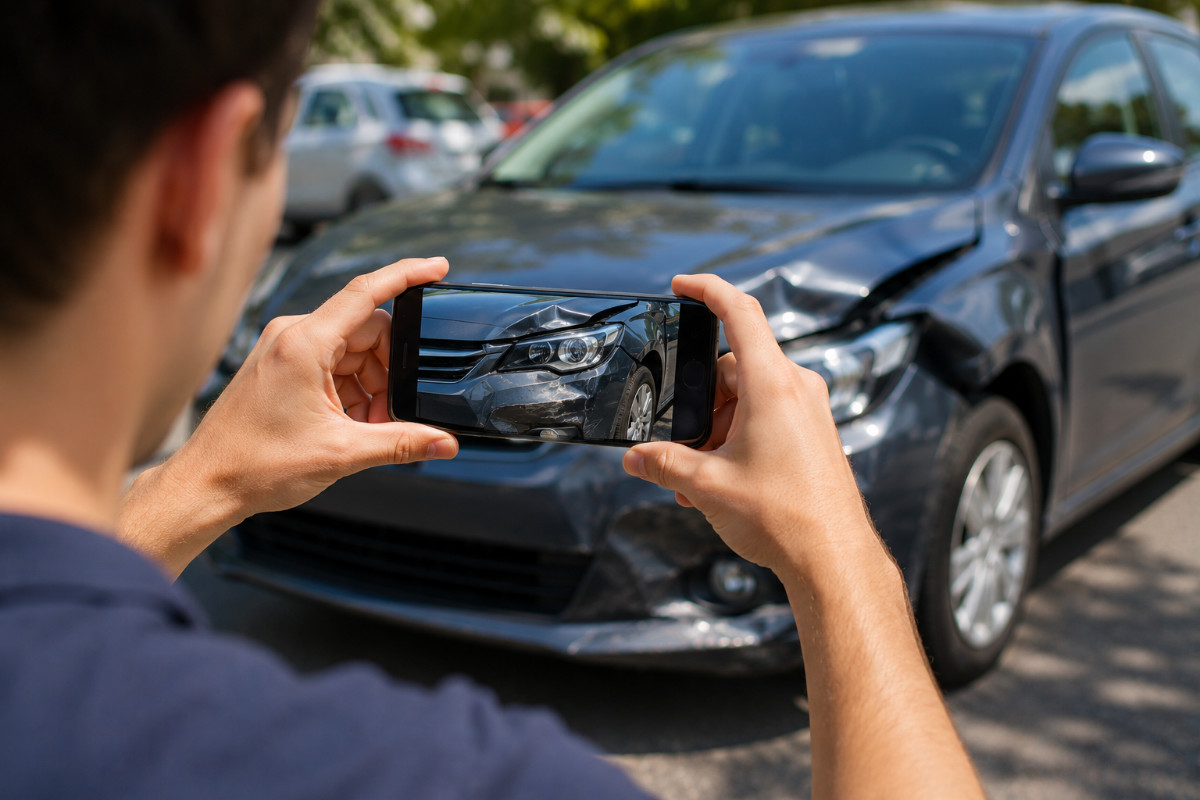
The moments immediately following a car accident can be stressful, but they are also your best opportunity to preserve valuable evidence. The photographs you take before vehicles are moved, debris is cleared, or weather conditions change can play a significant role when filing an insurance claim or pursuing a personal injury case. Clear, well-documented images often help establish how the collision occurred, the extent of the damage, and the conditions at the scene.
Were you injured in a car accident and unsure whether you gathered enough evidence? Contact Hauptman, O’Brien, Wolf & Lathrop, LLC for a free consultation. Call (402) 241-5020 today to discuss your case with an experienced car accident attorney. We proudly serve injury victims throughout Nebraska and Iowa from our offices in Omaha, South Omaha, Bellevue, Lincoln, Council Bluffs, and Sioux City.
First off… Why Do Photos Matter After a Car Accident?
Photographs often become some of the strongest evidence available after a collision. While police reports, witness statements, and vehicle inspections all contribute to determining fault, photographs provide a visual record that cannot easily be disputed. They preserve details that may disappear within minutes, including skid marks, vehicle positions, broken glass, weather conditions, and traffic control devices.
Both Nebraska and Iowa require drivers to report certain accidents depending on factors such as injuries, fatalities, property damage, and whether law enforcement investigates the crash. Even after an official report is prepared, your own photographs may reveal details that are not fully documented by responding officers. Insurance companies frequently compare accident scene photographs with repair estimates, medical records, and witness statements when evaluating claims.
Taking comprehensive photos also protects you if another driver later changes their version of events. A few extra minutes documenting the scene can prevent lengthy disputes months later when memories begin to fade.
Photo Checklist: What’s Most Important
The best accident photographs tell the complete story of what happened. Instead of focusing only on damaged vehicles, document the entire scene from multiple angles before anything changes.
Wide Photos Covering the Whole Scene
Begin by stepping back, if it is safe to do so, and photographing the entire accident scene. Capture nearby intersections, surrounding buildings, lane markings, traffic flow, and the relationship between all involved vehicles.
- Overall crash scene
- Multiple camera angles
- Nearby intersections
- Surrounding buildings
- Roadway layout
These images help accident reconstruction experts understand how the collision occurred and establish where each vehicle was located before emergency responders arrived.
Vehicle Damage Photos
After documenting the broader scene, move closer to photograph each damaged area. Take multiple pictures from different distances and angles.
- Front-end damage
- Rear damage
- Side damage
- Interior damage
- Airbag deployment
- Broken windows
These photographs help demonstrate impact severity, support repair estimates, and may provide insight into how occupants were injured.
Photos That Clearly Depict Vehicle Positions
Before any vehicle is moved, document exactly where each one came to rest.
- Final resting positions
- Tire direction
- Distance between vehicles
- Nearby landmarks
Vehicle placement often becomes critical when determining liability, particularly if the drivers later disagree about how the collision happened.
Photos of License Plates and Other Identification Details
Record identifying information before drivers leave the scene.
- License plates
- Vehicle identification numbers (VIN)
- Driver’s licenses
- Insurance cards
- Company logos on commercial vehicles
These photos help identify the correct parties, insurance policies, and vehicle owners if paperwork is misplaced later.
Road Details and Environment Details
Road conditions frequently contribute to crashes. Photograph anything that may have influenced the collision.
- Skid marks
- Debris
- Potholes
- Standing water
- Ice or snow
- Construction zones
- Lighting conditions
These images may demonstrate whether hazardous roadway conditions, weather, or poor maintenance contributed to the accident.
Traffic Signs
Capture every traffic control device visible near the collision.
- Stop signs
- Yield signs
- Speed limit signs
- Traffic lights
- Warning signs
Traffic control photographs help establish which driver had the legal right-of-way and whether roadway signs were clearly visible.
What to Photograph or Screenshot if You Were a Passenger in a Rideshare Vehicle
Passengers often have access to valuable digital evidence that drivers may not think to preserve. If you were riding in an Uber or Lyft, take screenshots before ending your trip within the app.
- Trip confirmation
- Driver information
- Vehicle information
- Trip route
- Pickup and drop-off locations
- Ride receipt
- Driver communication within the app
In case of a rideshare accident, records such as these can help establish which rideshare company was involved and confirm the timing of your trip.
What to Photograph if the At-Fault Driver Fled the Scene
Hit-and-run accidents present unique challenges because identifying the responsible driver becomes a top priority. Even if the fleeing vehicle disappears, photographs of the surrounding scene may provide valuable investigative leads.
If possible, photograph:
- Debris left behind by the other vehicle: Broken headlights, mirrors, paint fragments, or vehicle parts may help identify the make and model.
- Tire marks: These may assist investigators in reconstructing the driver’s path.
- Nearby security cameras: Photograph businesses, homes, or intersections that may have surveillance footage.
- Witness vehicles: Capture nearby vehicles whose occupants may have seen the collision.
- Nearby landmarks: These help establish the exact crash location.
- Your own vehicle damage: Photograph every damaged area before repairs begin.
Even if you only remember part of the fleeing vehicle’s license plate or a unique feature, documenting everything immediately increases the likelihood of identifying the driver.
Mistakes to Avoid When Taking Photos at a Crash Scene
Good documentation involves more than simply taking a few pictures. Certain mistakes can reduce the usefulness of your evidence or even place you in danger.
Avoid these common errors:
- Putting yourself in unsafe traffic: Never enter active traffic lanes solely to obtain better photographs.
- Taking too few pictures: It is generally better to have more photographs than too few.
- Ignoring minor damage: Small dents or scrapes may later become important evidence.
- Forgetting weather conditions: Rain, snow, fog, or glare can significantly affect liability determinations.
- Using filters or editing photos: Original images are generally more reliable than altered versions.
- Waiting until later: Vehicles are moved, debris disappears, and lighting changes quickly after a crash.
Your safety should always remain the first priority. If injuries require immediate medical attention, focus on getting help rather than gathering photographs.
When to Call a Car Accident Lawyer in Nebraska or Iowa
Photographs are valuable, but they represent only one part of a successful injury claim. Medical records, witness statements, police reports, expert opinions, and insurance documentation all work together to establish liability and damages.
Nebraska and Iowa each have different filing deadlines and legal rules that may affect your claim. For example, both states follow modified comparative fault systems, but the specific legal standards differ. An attorney can evaluate how those laws apply to your case while preserving evidence before it disappears.
Have questions about whether your photographs are enough to support your claim? Contact Hauptman, O’Brien, Wolf & Lathrop, LLC for a free consultation by calling (402) 241-5020. We can review your evidence, explain your legal options, and help protect your right to pursue full compensation.


