



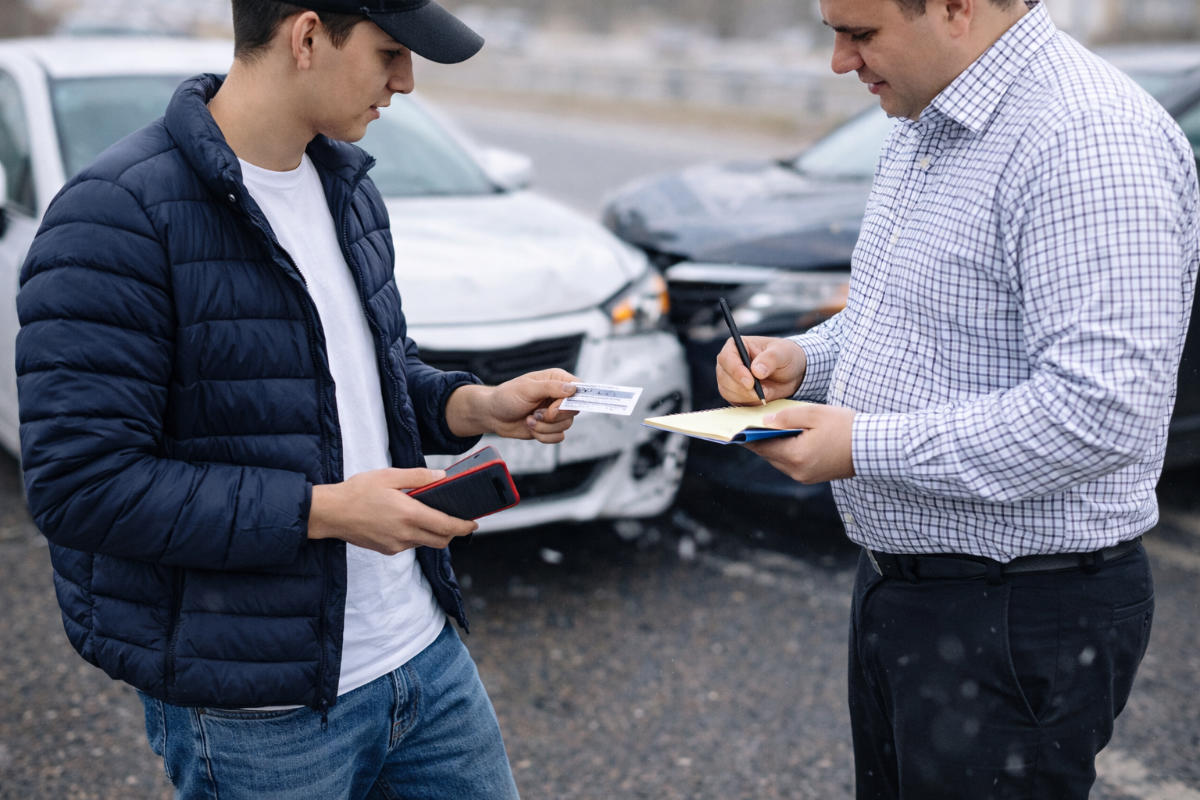
A car accident can leave you shaken, disoriented, and unsure of what to do next. In those first moments, safety and medical needs come first, but what happens immediately after often has lasting legal consequences. One of the most important steps is properly exchanging contact and insurance information with the other driver. Done correctly, this simple act can protect your rights; done poorly, it can create unnecessary disputes or delays.
In Nebraska and Iowa, exchanging information is not just practical; it is a legal obligation. The details you collect, and how you collect them, often form the foundation of any insurance claim or personal injury case. Understanding what information to exchange, what to avoid saying, and how to document the interaction can make a meaningful difference in the outcome of your claim.
If you’ve been in a car accident in Nebraska or Iowa and you’re uncertain about your next steps, don’t hesitate to contact our motor vehicle accident attorneys at Hauptman O’Brien.
When and Why Information Exchange Matters After a Crash
The exchange of information should happen as soon as it is safe to do so. If anyone is injured or traffic conditions are dangerous, call 911 first and follow instructions from emergency responders. Once the scene is secure, exchanging information helps ensure that all parties can properly report the accident to their insurers and, if necessary, pursue legal claims.
From a legal standpoint, this exchange establishes identity, insurance coverage, and accountability. It also prevents situations where a driver later becomes difficult to locate or denies involvement. In contested cases, early and accurate information exchange often reduces delays and disputes.
Nebraska law requires drivers involved in accidents resulting in injury, death, or property damage to stop and provide identifying information. Iowa has similar requirements. Failing to do so can lead to penalties and complicate your own claim, even if you were not at fault.
What Information You Are Legally Required to Exchange
Drivers are required to provide certain basic details after a car accident. These requirements are straightforward, but stress can make them easy to forget. Knowing exactly what to collect helps keep the interaction focused and professional.
You should exchange the following information with the other driver:
- Full name and current address
- Phone number
- Driver’s license number and issuing state
- Insurance company name and policy number
- Vehicle make, model, color, and license plate number
It is also wise to confirm that the information matches what appears on official documents. Taking photos of a driver’s license and insurance card, with permission, helps avoid transcription errors. Accuracy matters; even small mistakes can slow down claims or create unnecessary follow-up work.
How to Exchange Information Without Admitting Fault
One of the most common mistakes drivers make is saying too much at the scene. Politeness and cooperation are important, but statements about fault can be taken out of context later. Apologies, guesses, or explanations may be used by insurers to argue liability.
Keep the interaction factual and calm. Exchange required information, confirm accuracy, and avoid discussing who caused the accident. Fault determinations are made later, based on evidence and applicable law, not roadside conversations.
This distinction is especially important in Nebraska, which follows a modified comparative negligence rule. If you are found to be 50 percent or more at fault, you may be barred from recovering compensation. Casual statements can unintentionally influence that analysis.
Documenting the Exchange for Your Records
Exchanging information is only half the task; documenting it properly is just as important. Written notes, photographs, and timestamps help preserve accuracy and credibility.
Consider taking the following steps after exchanging information:
- Photograph insurance cards and driver’s licenses if possible
- Write down the time and location of the exchange
- Note the condition of the other driver and any statements made
- Save all photos and notes in a secure location
These records become part of the broader evidence package used during insurance claims and, if necessary, litigation. They help your attorney verify facts quickly and respond to insurer inquiries efficiently.
What to Do if the Other Driver Refuses to Cooperate
Not all drivers are cooperative after an accident. Some may refuse to share information, provide incomplete details, or attempt to leave the scene. If this happens, remain calm and prioritize safety.
Call law enforcement immediately and report the situation. Provide officers with as much information as you can, including vehicle description and license plate number. Police involvement often resolves non-cooperation and creates an official record.
If the driver leaves the scene, this may constitute a hit-and-run, which carries serious legal consequences. Prompt reporting protects your own position and helps law enforcement take appropriate action. In these situations, uninsured or underinsured motorist coverage may also become relevant.
The Role of Witnesses in Information Exchange
Witnesses can play a critical role when information exchange is incomplete or disputed. While they are not required to provide insurance details, their contact information can be invaluable.
If witnesses are present, ask for their names and phone numbers. Briefly note what they observed, if they are willing to share. Witness accounts often support or clarify details about how the accident occurred and whether information was exchanged properly.
In cases where the other driver later disputes facts, witness statements can help fill gaps and strengthen your credibility. Insurance companies and courts give weight to neutral third-party observations.
Information Exchange in Accidents Involving Commercial Vehicles
Accidents involving trucks, delivery vehicles, or company cars introduce additional layers of complexity. In these cases, the driver’s personal insurance may not be the only coverage involved.
In addition to standard information, you should attempt to collect:
- Employer or company name
- Commercial insurance provider information
- USDOT number, if applicable
Commercial cases often involve higher policy limits and more aggressive defense strategies. Accurate early information helps identify all responsible parties and insurance policies. This is particularly important in cases involving serious injuries or catastrophic losses.
How Police Reports Interact With Exchanged Information
Police reports often include the information exchanged at the scene, but they are not a substitute for your own documentation. Officers may record details inaccurately or omit certain items due to time constraints or evolving conditions.
After the accident, request a copy of the police report and review it carefully. Compare it to your own records. If discrepancies exist, note them and discuss them with your attorney.
Police reports are influential but not determinative. In personal injury claims, they are considered alongside photographs, witness statements, medical records, and exchanged information. Consistency across these sources strengthens your case.
How Exchanged Information Fits Into the Claims Process
Exchanging contact and insurance information is the first step in a longer legal and insurance process. Understanding how it fits into that process helps set expectations.
The typical sequence includes:
- Reporting the accident to your insurer: Your insurer uses the exchanged contact and policy information to open a claim, verify coverage, and begin assessing liability and potential damages tied to the collision.
- Medical evaluation and treatment: Accurate driver and insurance details help connect your injuries to the accident, ensuring medical records and billing are properly attributed to the correct claim and responsible party.
- Investigation and evidence gathering: Attorneys and insurers rely on exchanged information to contact involved drivers, obtain statements, request records, and compare accounts against physical and documentary evidence.
- Negotiation with insurance companies: Clear insurance information allows negotiations to move forward efficiently, reducing coverage disputes and helping your attorney respond effectively to delay or undervaluation tactics.
- Litigation, if a fair settlement cannot be reached: If a lawsuit becomes necessary, properly exchanged information ensures the correct parties are identified and served, avoiding procedural delays that could slow the case.
Errors or omissions during the initial exchange can cause delays at every stage. Clear, accurate information allows your attorney to move efficiently and respond decisively to insurer tactics.
Common Mistakes to Avoid During Information Exchange
Even well-intentioned drivers can make mistakes that complicate their claims. Being aware of these pitfalls helps you avoid them.
Common mistakes include:
- Admitting fault or apologizing unnecessarily: Statements made at the scene can be interpreted as admissions of liability and later used by insurance companies to argue shared or full responsibility.
- Accepting incomplete or handwritten insurance details without verification: Inaccurate or partial information can delay claims, complicate coverage confirmation, and require extra investigation to identify the correct insurer.
- Failing to document the exchange: Without photographs or written notes, important details may be forgotten or disputed, weakening your position during insurance negotiations or legal proceedings.
- Relying solely on verbal assurances: Verbal promises to handle damages are not enforceable and often disappear once insurance companies and adjusters take control of the claim.
- Forgetting to gather witness contact information: Independent witnesses can help confirm how the exchange occurred and what happened, providing critical support if the other driver later disputes the facts.
Avoiding these errors preserves your options and protects your credibility throughout the claims process.
Protecting Your Rights Starts With Proper Information Exchange
What you do in the minutes after a car accident can influence your financial and legal future. Properly exchanging contact and insurance information is a simple step, but it carries significant weight. When injuries are involved, accuracy and restraint matter as much as cooperation.
Hauptman, O’Brien Personal Injury Lawyers have helped accident victims across Nebraska and Iowa navigate these moments for decades. With offices in Omaha, South Omaha, Bellevue, Lincoln, Council Bluffs, and Sioux City, the firm understands local laws, insurers, and accident dynamics.
If you have been injured in a car accident and are unsure what steps to take next, let’s talk. You can call Hauptman O’Brien at (402) 241-5020 or request a free case review online. We are available 24/7, because the moments after a crash can shape everything that follows. When confusion, paperwork, and insurance pressure start to pile up, our team is here to help you protect your rights and move forward with confidence.


