



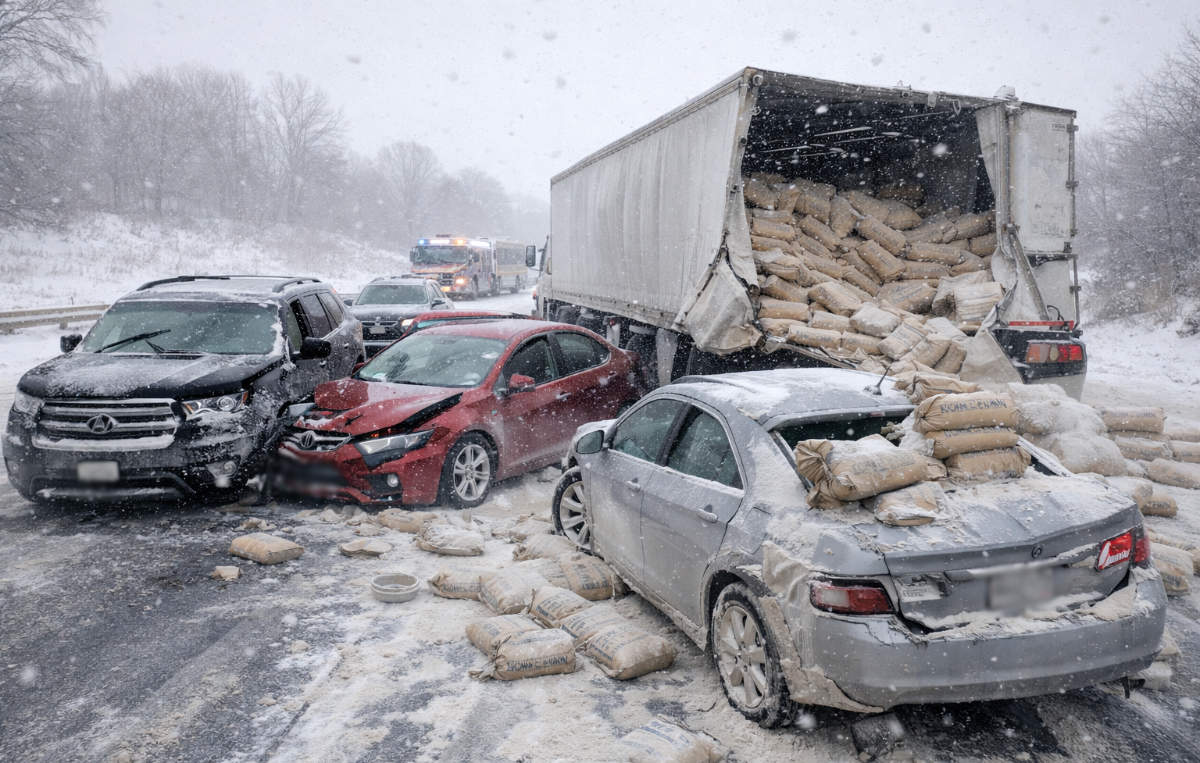
Cargo falling from a vehicle is not just a startling sight; it can be a life-altering event. Whether it is construction debris tumbling from a truck bed or furniture sliding off a trailer on the interstate, unsecured cargo creates sudden hazards that leave drivers with little time to react. These accidents often happen without warning and can result in severe injuries, multi-vehicle pileups, or worse.
For injured victims, the aftermath raises a pressing legal question: who is responsible? Liability is not always limited to the driver you see in front of you. In Nebraska and Iowa, unsecured cargo accidents frequently involve multiple layers of responsibility, including drivers, employers, loading companies, or even manufacturers. Understanding how liability is determined is a critical first step toward protecting your rights and securing fair compensation.
Have you been injured in an accident caused by a truck’s unsecured cargo? Reach out to our truck accident attorneys today. Call us at (402) 241-5020 or contact us online for a free consultation.
Why Unsecured Cargo Accidents Are Especially Dangerous
Unsecured cargo accidents differ from typical car crashes because the danger often comes from an object, not direct vehicle contact. A mattress, ladder, or stack of lumber can strike a vehicle at highway speeds or force drivers into evasive maneuvers that trigger secondary collisions. These situations are chaotic, and injuries are often severe.
Motorcyclists, bicyclists, and pedestrians face heightened risk. Even a small object can be catastrophic when there is little physical protection. Commercial trucks add another layer of danger; their cargo is heavier, larger, and more likely to cause chain-reaction crashes.
Common consequences of unsecured cargo accidents include:
- Traumatic brain injuries from sudden impact or rollovers
- Spinal cord injuries caused by abrupt swerving or collisions
- Multi-vehicle crashes when debris blocks traffic lanes
- Fatal injuries, particularly on high-speed highways
From a legal standpoint, the severity of these injuries often increases the stakes. Insurance companies scrutinize liability closely, and delays frequently occur while fault is contested among multiple parties.
Cargo Securement Laws in Nebraska and Iowa
Both Nebraska and Iowa have clear laws requiring drivers to properly secure loads. These statutes exist to protect the public and reduce preventable accidents. Violating them can lead to traffic citations, fines, and civil liability.
In Nebraska, drivers must ensure that cargo does not spill, blow, or fall from their vehicle. Iowa law imposes similar obligations and extends them to cover any load that could endanger other motorists. For commercial drivers, federal regulations from the Federal Motor Carrier Safety Administration often apply, setting detailed standards for load securement.
These laws matter in personal injury cases because a statutory violation can support a negligence claim. If a driver failed to secure cargo as required, that failure may serve as evidence that they breached a legal duty of care. This connection between traffic law and civil liability is often central to unsecured cargo cases.
Who Can Be Held Liable for Unsecured Cargo?
Liability in unsecured cargo accidents is rarely straightforward. While the driver is often the first focus, responsibility may extend well beyond the person behind the wheel. Identifying all liable parties is essential to recovering full compensation.
Potentially responsible parties may include:
- The driver who failed to inspect or secure the load
- A trucking company that imposed unrealistic schedules or failed to train employees
- A third-party loading or shipping company that improperly loaded the cargo
- A vehicle or equipment manufacturer, if a defect caused the load to shift
Each party owes a different duty of care, and breaches can overlap. For example, a driver may be responsible for failing to notice loose cargo, while an employer may be liable for inadequate training or supervision. These overlapping duties often lead to contested claims and extended negotiations.
The Role of Employers and Trucking Companies
When unsecured cargo accidents involve commercial vehicles, employers and trucking companies often play a central role. Under the legal doctrine of respondeat superior, an employer can be held responsible for an employee’s negligence if the employee was acting within the scope of employment.
Beyond vicarious liability, companies may face direct liability. Failure to implement proper loading protocols, neglecting routine inspections, or pressuring drivers to skip safety checks can all support a claim. These cases often require in-depth investigation, including review of internal policies, driver logs, and training records.
From a practical standpoint, employer involvement changes the dynamics of a case. Commercial insurers tend to defend aggressively, and settlements may take longer. However, they also typically provide higher policy limits, which can be crucial in catastrophic injury or wrongful death cases.
How Liability Is Proven After an Unsecured Cargo Accident
Establishing liability requires more than showing that cargo fell. A successful claim connects the accident to a specific failure or series of failures. This process unfolds step by step and often begins immediately after the crash.
Key stages typically include:
- Initial consultation to identify potential defendants and applicable laws
- Investigation involving accident reconstruction and cargo securement analysis
- Evidence collection, such as photographs, inspection reports, and witness statements
- Negotiation with insurers to pursue a settlement before litigation
If negotiations fail, litigation may follow. Discovery allows attorneys to subpoena records and depose witnesses. In some cases, expert testimony is used to explain how cargo should have been secured and why it failed. These steps take time, and delays often occur when multiple parties dispute fault.
Comparative Fault and Shared Responsibility
Nebraska and Iowa both apply comparative fault principles, which can significantly affect recovery. Under these systems, compensation may be reduced if an injured person is found partially at fault. In some scenarios, insurers argue that a driver should have avoided debris or reacted differently.
This is where careful legal analysis becomes critical. Sudden cargo spills often leave no reasonable opportunity to avoid impact. Demonstrating this reality can make the difference between a reduced settlement and full compensation.
Comparing outcomes illustrates the point. In uncontested cases where liability is clear, settlements may be reached efficiently. In contested cases involving shared fault arguments, litigation may be necessary to achieve a fair result. Understanding this distinction helps injured individuals set realistic expectations.
Damages Available in Unsecured Cargo Accident Claims
Unsecured cargo accidents frequently cause extensive losses. Compensation is designed to address both immediate and long-term consequences. Calculating damages requires a comprehensive view of how the injury affects every aspect of life.
Recoverable damages may include:
- Medical expenses, including future treatment and rehabilitation
- Lost wages and diminished earning capacity
- Pain and suffering tied to physical and emotional harm
- Wrongful death damages for surviving family members
Insurance companies often attempt to narrow these categories, focusing on short-term costs. Experienced legal representation pushes back by documenting future needs and broader impacts. This difference in approach often determines whether a settlement truly reflects the harm suffered.
Injured in a Motor Vehicle Accident Due to Unsecured Cargo? Contact Hauptman O’Brien Today!
Unsecured cargo accidents are rarely simple, and liability is often disputed from the outset. If you are facing mounting medical bills, lost income, or long-term recovery after such a crash, clarity and advocacy matter. These cases require careful investigation, familiarity with Nebraska and Iowa laws, and the resolve to stand up to well-funded insurers.
Hauptman, O’Brien Personal Injury Lawyers bring over 298 years of combined legal experience to these complex claims. Serving Nebraska and Iowa clients, the firm understands the regional legal landscape and the real-world impact these accidents have on you and your family.
When unsecured cargo changes your future, you deserve more than guesswork. The truck accident attorneys at Hauptman O’Brien can identify who is truly responsible and fight for the compensation you need to protect your rights and safeguard your future. Call us today at (402) 241-5020 or contact us online for a free consultation.







This was the 1st time I’ve ever had to use this type of service. Hands down would recommend this team for all your injury needs. They were professional, made sure everything was understood and was by my side step by step. I really felt like they were in my corner at all times!
Kathryn Hartnett went above and beyond to meet my needs as a unexpected life change happened. Everyone from the front desk to the back where amazing! Thank you so much!