



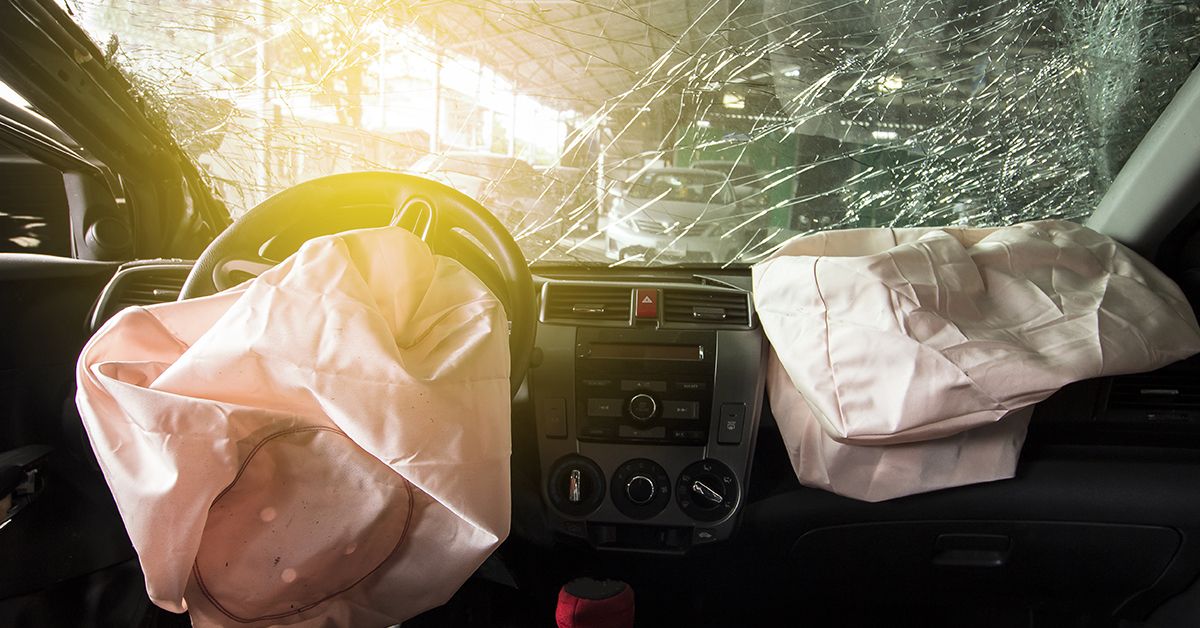
Airbag injuries are more complicated than people realize. They are designed to save lives, but nonetheless, they can also cause serious harm when they deploy with excessive force, fail to deploy when needed, or contain dangerous manufacturing defects. When you sustain an injury from an airbag, you may be able to collect compensation for your injury. Determining who is legally responsible is rarely straightforward, though. Depending on the circumstances, liability may rest with another negligent driver, the vehicle manufacturer, the airbag manufacturer, or even multiple parties.
If you suffered an airbag-related injury in Nebraska or Iowa, you may want to know how airbag injury-related liability works. In this article, we explain who may be responsible, what evidence matters, and how these cases are evaluated under Nebraska and Iowa law.
Has a deploying airbag caused you an injury? If so, reach out to a personal injury lawyer at Hauptman, O’Brien, Wolf & Lathrop. Call us today at (402) 241-5020 or contact us via the online form for a free case review.
Not Every Airbag Injury Has the Same Legal Cause
An airbag injury is not a legal claim by itself. Instead, the cause of the injury determines who may be responsible.
For example, if another driver ran a red light and caused the collision, that driver’s negligence may make them liable for all injuries resulting from the crash, including those caused by normal airbag deployment. On the other hand, if the airbag exploded with excessive force or failed to deploy because of a manufacturing defect, the vehicle or component manufacturer may bear responsibility under product liability laws.
Our attorneys often see situations involving multiple contributing factors. A crash caused by another driver’s negligence may also expose a defective airbag that worsens the victim’s injuries. In these cases, more than one party may share liability.
Examples include:
- Negligent driver: Causes the collision that triggered the airbag deployment.
- Vehicle manufacturer: Designs or assembles a vehicle with defective safety systems.
- Airbag manufacturer: Produces defective inflators, sensors, or deployment mechanisms.
- Parts supplier: Manufactures a defective component incorporated into the airbag system.
- Maintenance provider: Improperly repairs or replaces airbag components after an earlier accident.
Identifying every potentially responsible party is important because it can significantly affect the compensation available.
When Another Driver May Be Responsible
Many airbag injury claims begin as ordinary car accident cases. Although the airbag caused part of the physical injury, it only deployed because another driver’s negligence caused the crash.
Suppose a distracted driver rear-ends your vehicle at highway speed. Your airbag deploys correctly, but you suffer facial fractures, burns, or eye injuries from the impact. In that situation, the negligent driver may still be legally responsible because their actions set the entire chain of events in motion.
Nebraska follows a modified comparative negligence rule. Under Nebraska Revised Statute §25-21,185.09, an injured person generally may recover damages as long as their negligence is less than the combined negligence of the defendants, although any recovery is reduced according to their percentage of fault. Iowa also applies modified comparative fault under Iowa Code Chapter 668, with its own rules governing when recovery may be reduced or barred.
Insurance companies frequently attempt to shift blame onto victims by arguing their injuries resulted solely from the airbag rather than the collision. A thorough accident investigation often tells a different story.
Evidence commonly includes:
- Police reports: Document the circumstances surrounding the collision.
- Crash reconstruction: Explains vehicle speeds, impact angles, and collision forces.
- Medical records: Connect injuries to the accident and airbag deployment.
- Electronic vehicle data: May reveal when and how the airbag system activated.
Product Liability Claims Involving Defective Airbags
Some airbag injuries occur because the safety device fails to perform as intended. These cases often fall under product liability law rather than ordinary negligence.
A defective airbag may:
- Fail to deploy: Leaving occupants without expected crash protection.
- Deploy unexpectedly: Activating without a collision.
- Deploy too forcefully: Causing preventable injuries.
- Send metal fragments outward: As occurred during the widely publicized Takata airbag recalls.
- Experience sensor failures: Preventing proper deployment timing.
Product liability claims differ from standard car accident cases because they focus on whether the product itself was unreasonably dangerous.
In Nebraska, product liability actions are governed by state law and generally require evidence showing the product was defective and that the defect caused the injury. Iowa has similar product liability principles that allow injured consumers to pursue compensation when defective products cause harm.
These cases frequently require engineers, accident reconstruction specialists, and automotive experts who can analyze the airbag system and determine why it malfunctioned.
How Evidence Can Determine Who Is Liable
Airbag injury cases often become technical very quickly. The physical evidence inside the vehicle may prove just as important as photographs from the accident scene.
Modern vehicles record significant amounts of electronic crash data. This information may reveal whether the sensors detected the collision properly, when the airbags deployed, and whether the system functioned as designed.
Important evidence often includes:
- The damaged vehicle: It should be preserved whenever possible before repairs or salvage.
- Airbag control module data: Sometimes called the vehicle’s “black box.”
- Recall records: Showing whether the vehicle had outstanding safety recalls.
- Repair history: Identifying previous damage or improper repairs.
- Manufacturer service bulletins: Addressing known defects or safety concerns.
- Expert inspections: Evaluating whether mechanical failures contributed to the injuries.
Preserving this evidence early can make a substantial difference. Once a vehicle is repaired, destroyed, or sold for salvage, valuable information may be permanently lost.
Compensation Available After an Airbag Injury
The compensation available depends on the severity of your injuries, the responsible parties, and the available insurance or financial resources.
Airbag injuries range from relatively minor burns to catastrophic brain injuries, spinal injuries, facial fractures, permanent vision loss, or wrongful death. In many cases, victims require extensive medical treatment long after the collision itself.
Potential damages may include:
- Medical expenses: Emergency treatment, surgeries, rehabilitation, and future medical care.
- Lost income: Wages lost during recovery and diminished future earning capacity.
- Pain and suffering: Physical pain, emotional distress, and reduced quality of life.
- Permanent disability: Long-term impairment affecting daily activities.
- Property damage: Vehicle repair or replacement costs.
- Wrongful death damages: Available to eligible surviving family members when appropriate.
Settlement negotiations sometimes resolve these claims efficiently. However, when manufacturers or insurers refuse to accept responsibility, litigation may become necessary. While trials generally require more time than negotiated settlements, they may also provide an opportunity to recover compensation that more accurately reflects the full extent of a victim’s losses.
Why Airbag Injury Cases Often Require Experienced Legal Representation
Airbag injury claims frequently involve multiple insurance companies, large automobile manufacturers, engineering experts, and complex legal issues. Unlike a routine collision claim, these cases may require extensive technical analysis to determine exactly why the injury occurred.
Large manufacturers often have significant legal resources dedicated to defending product liability claims. Insurance companies may argue that your injuries were unavoidable or unrelated to any defect. They may also claim preexisting medical conditions contributed to your symptoms.
Our attorneys know how to investigate these issues thoroughly. We work with qualified experts, preserve critical evidence, review recall information, analyze vehicle data, and identify every party that may share legal responsibility. This comprehensive approach helps position our clients to pursue the maximum compensation available under Nebraska or Iowa law.
Even if you are unsure whether your injuries resulted from the collision, the airbag, or both, obtaining legal guidance early can help protect important evidence before it disappears.
Injured by an Airbag? Contact Hauptman, O’Brien, Wolf & Lathrop, LLC Today
Determining who is liable for an airbag injury is rarely as simple as pointing to the other driver. The answer may involve defective vehicle components, negligent motorists, manufacturers, or several parties working together to cause your injuries. At Hauptman, O’Brien, Wolf & Lathrop, LLC, we investigate every angle of your case so that no responsible party escapes accountability. With over 268 Years of Combined Legal Experience, we have the knowledge and resources to handle even the most challenging airbag injury claims throughout Nebraska and Iowa.
If you were injured in a crash involving a defective or improperly functioning airbag, don’t try to sort through these complex legal issues alone. Let our experienced personal injury attorneys evaluate your case, explain your legal options, and pursue the compensation you deserve. Contact Hauptman, O’Brien, Wolf & Lathrop today for a free case review at one of our offices in Omaha, South Omaha, Bellevue, Lincoln, Council Bluffs, or Sioux City. Protecting your rights starts with a conversation.


