



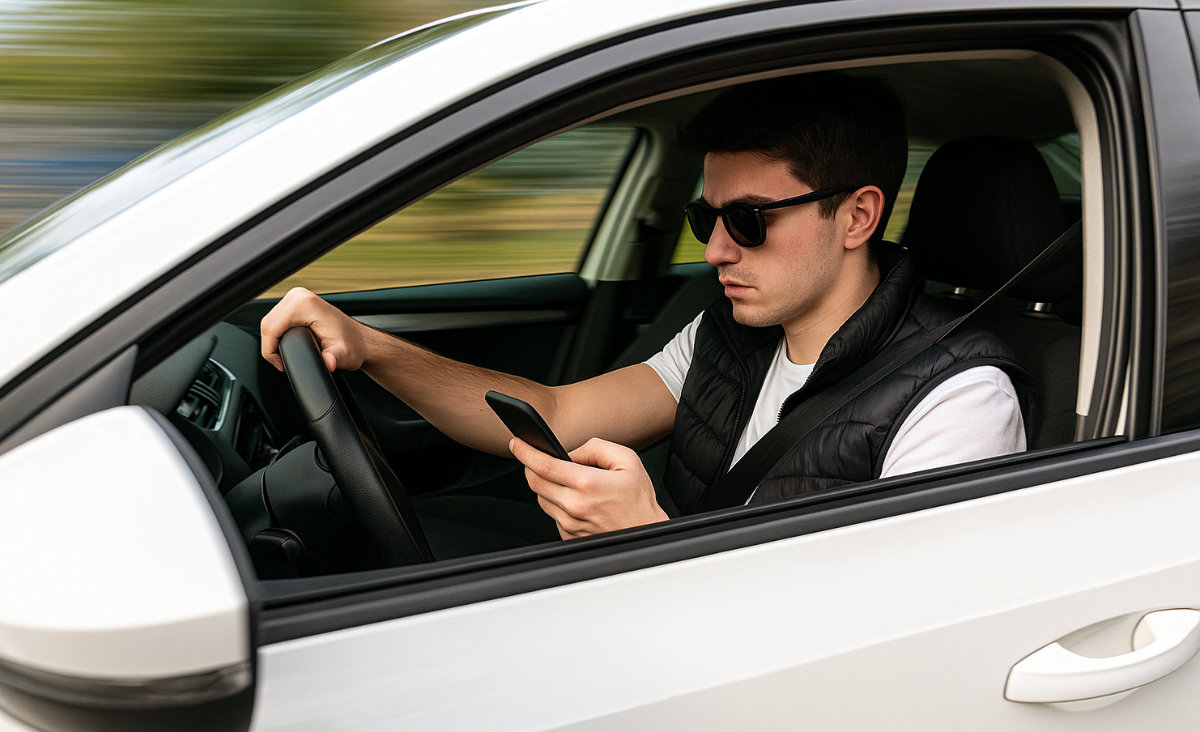
Distracted driving continues to be one of the most persistent causes of serious crashes nationwide. Both Nebraska and Iowa face growing challenges as smartphones, in-vehicle screens, and countless digital notifications compete for drivers’ attention. While the two states share many road safety priorities, their distracted driving laws differ in important ways that drivers should understand.
For victims of distracted driving crashes, these differences matter. They affect how fault is determined, what evidence may be available, and how an attorney approaches building a case. Hauptman, O’Brien Personal Injury Lawyers represents clients throughout Nebraska and Iowa and regularly handles cases where distraction plays a crucial role.
Nebraska Distracted Driving Laws: What Drivers Need to Know
Nebraska’s distracted driving laws focus primarily on texting behind the wheel. The state prohibits reading, typing, or sending messages while driving any motor vehicle. Although Nebraska originally enforced texting bans as a secondary offense, legislation shifted over time to increase accountability. Today, law enforcement can stop drivers solely for texting, and penalties may increase if the violation contributes to an injury crash.
Nebraska’s laws also apply to more than just smartphones. Any handheld electronic communication device falls under the statute, including tablets and other messaging equipment. In practical terms, this means drivers must keep their hands free and their attention on the road. For younger drivers, Nebraska imposes stricter rules, and learner’s permit holders are prohibited from using handheld devices under most circumstances.
Distracted driving is a major topic across Nebraska road safety discussions. One of our firm’s related articles explains how distraction contributes to rear-end collisions, especially in urban traffic where sudden stops are common. Another discusses ongoing research initiatives that examine attention, reaction times, and ways to reduce distraction-related crashes statewide. These resources reflect the larger public effort to curb dangerous habits and improve roadway safety for everyone.
Iowa Distracted Driving Laws: A Broader Approach to Device Use
Iowa’s distracted driving laws take a broader approach than Nebraska’s. While texting is banned for all drivers, Iowa also prohibits most forms of handheld phone use. This includes browsing the internet, using social media, or manually entering information into a GPS app. Exceptions exist for using a device in a hands-free mode, dialing a number, or accessing emergency services, but drivers must still maintain control of the vehicle.
Iowa law is especially strict on novice drivers. Those with restricted or intermediate licenses cannot use any electronic device while driving, even hands-free. This reflects statewide concerns about young driver safety and early crash risks. Iowa’s laws also allow police to stop vehicles solely for handheld device violations.
These rules tie closely to how distracted driving crashes are investigated. One of the firm’s blog posts discusses how cell phone records can serve as evidence, helping attorneys show whether a driver was on a call, using an app, or sending messages during the moments leading up to a collision. Iowa’s stricter bans make those records even more valuable in proving fault.
Key Differences Between Nebraska and Iowa Distracted Driving Laws
Even though Nebraska and Iowa share many regional traffic issues, their distracted driving laws differ in several meaningful ways. These differences can affect both out-of-state drivers and accident victims pursuing compensation.
Some of the most important distinctions include:
- Iowa bans nearly all handheld phone use, while Nebraska focuses primarily on texting.
- Iowa allows hand-held device stops as a primary offense; Nebraska previously treated them differently before changes to enforcement.
- Nebraska does not ban dialing or certain forms of device handling, while Iowa’s laws apply more broadly.
- Iowa imposes stricter rules on novice drivers using any device at all.
- Penalties may escalate differently depending on the state and whether injuries occurred.
- Iowa’s broader ban increases opportunities for evidence collection in distracted driving claims.
- Nebraska may require more extensive investigation to identify distraction beyond texting alone.
These distinctions matter because distracted driving is rarely limited to one behavior. Drivers may be scrolling through apps, setting navigation routes, responding to notifications, or watching videos. Understanding each state’s specific legal framework helps victims know what evidence might exist and what claims may be strongest.
Enforcement Practices and How They Influence Accident Claims
Both Nebraska and Iowa face similar challenges when enforcing distracted driving laws. Officers must observe the violation, document the behavior, and ensure that evidence is strong enough to support citations or criminal charges. Enforcement campaigns often increase during peak travel periods, such as holidays and summer months, when distraction-related crashes rise.
For drivers involved in crashes, enforcement practices influence the availability of evidence. Police may note suspicious behavior in crash reports, mention a driver’s inconsistent statements, or retrieve device information if warranted. Investigators may also interview witnesses who saw the at-fault driver looking down, swerving, or reacting late to traffic signals.
Victims often underestimate the importance of enforcement details. Yet these elements can significantly strengthen a personal injury claim. An officer’s observations, traffic or business camera footage, or inconsistencies in the at-fault driver’s account may all support the argument that distraction played a role. Hauptman, O’Brien routinely requests and reviews these materials to build clear, persuasive cases for injured clients.
Penalties for Distracted Driving in Nebraska and Iowa
Penalties for distracted driving vary widely depending on the circumstances of the incident and whether someone was injured. Both states impose fines, potential license consequences, and increased penalties for repeat offenders. However, neither state treats distracted driving as lightly as it once did. Rising crash statistics have encouraged lawmakers to take a tougher stance over the past decade.
Typical penalties may include:
- Fines for handheld device violations
- Increased penalties if the distraction contributed to a crash
- Restrictions or probation for young or inexperienced drivers
- Possible license suspension in serious or repeat cases
- Mandatory court appearances for certain violations
- Enhanced consequences when injuries or fatalities occur
- Distracted driving education programs ordered by courts
It is important to recognize that these penalties apply to the at-fault driver. Victims pursuing compensation must show that the distraction caused or contributed to the collision. Penalties help demonstrate negligent behavior, but civil claims require separate proof supported by evidence.
How Distracted Driving Affects Liability in Injury Cases
When a driver is distracted, the law often considers their behavior negligent. Distracted drivers fail to notice hazards, stop too late, drift between lanes, or completely miss traffic signals. Both Nebraska and Iowa allow injury victims to pursue compensation from distracted drivers, but the path to proving negligence differs depending on what evidence is available.
In Nebraska, showing distraction may require additional investigation. A driver might not admit to texting, and officers may not always recover enough information from the scene. This is where attorneys use indirect evidence such as skid marks, vehicle data, witness statements, or cell phone records.
In Iowa, handheld device bans create more opportunities for direct evidence. If a driver was holding a phone, scrolling, or manually entering information, the violation itself may support a negligence claim. Combined with device records and police observations, Iowa cases can sometimes provide a clearer path to establishing fault.
No matter which state the crash occurs in, distracted driving creates dangerous conditions. Victims often face medical bills, lost work, and painful rehabilitation. Hauptman, O’Brien supports clients by gathering the evidence needed to show negligence and holding distracted drivers accountable.
Why Understanding These Laws Matters for Drivers and Victims
Drivers frequently travel between Nebraska and Iowa, often without realizing that the distracted driving laws shift as soon as they cross the river. Understanding what is allowed and what is prohibited can reduce the risk of violations and improve overall safety for everyone on the road.
For victims, these laws matter even more. The strength of an injury claim depends on how well distraction can be proven. Cell phone data, crash reports, witness statements, and enforcement details all help establish liability. Our firm has discussed these topics extensively, including how rear-end crashes often stem from distraction and how research efforts are evolving to combat the problem.
The legal differences between Nebraska and Iowa do not change the core reality. Distracted driving is preventable. When drivers fail to pay attention, the consequences can be life-changing. That is why victims need strong representation to protect their rights and pursue the compensation they deserve.
Contact a Nebraska or Iowa Car Accident Attorney Today for a Free Consultation
If you were injured in a distracted driving accident in Nebraska or Iowa, you do not have to navigate the aftermath alone. The laws can be confusing, evidence may disappear quickly, and insurance companies often try to minimize or deny claims. Having an experienced attorney on your side can make all the difference.
Hauptman, O’Brien Personal Injury Lawyers serves clients throughout Omaha, Bellevue, Lincoln, South Omaha, Council Bluffs, Sioux City, and the surrounding areas. Our team understands the complexities of distracted driving cases and knows how to secure crucial evidence needed to prove negligence. Contact us today for a free consultation and let us help you move forward with confidence.







This was the 1st time I’ve ever had to use this type of service. Hands down would recommend this team for all your injury needs. They were professional, made sure everything was understood and was by my side step by step. I really felt like they were in my corner at all times!
Kathryn Hartnett went above and beyond to meet my needs as a unexpected life change happened. Everyone from the front desk to the back where amazing! Thank you so much!