



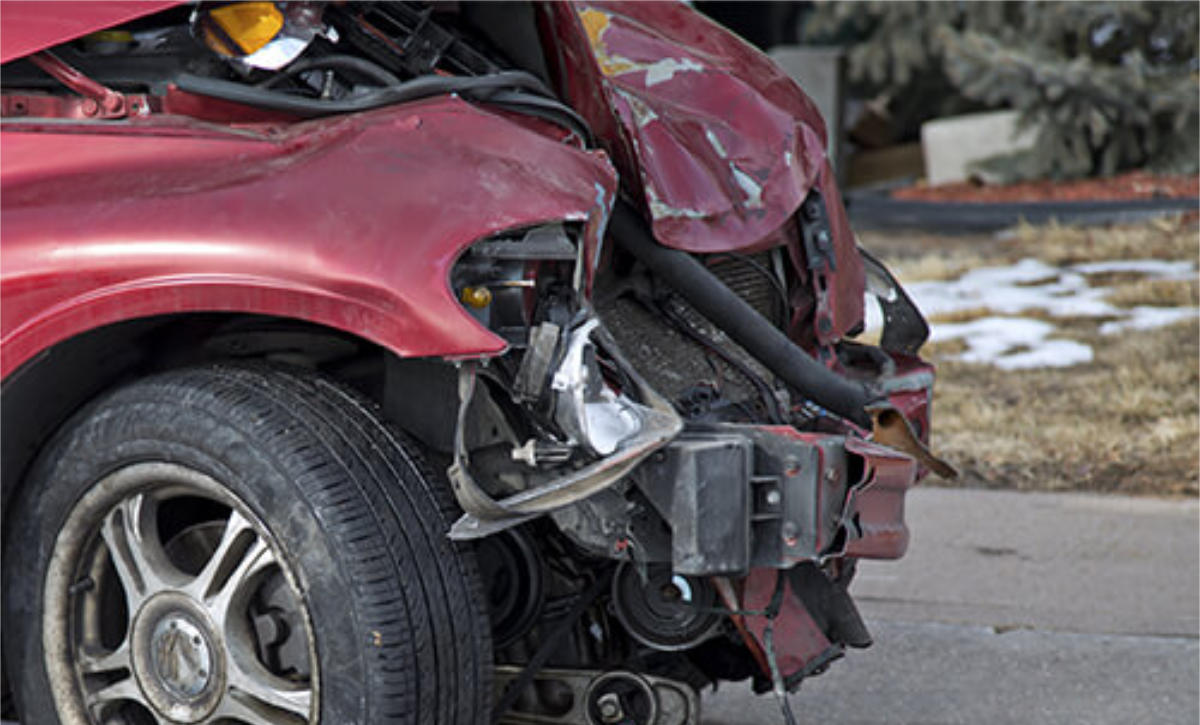
Thousands of motor vehicle accidents occur across Iowa each year, leaving drivers, passengers, motorcyclists, pedestrians, and families dealing with injuries and unexpected financial losses. Iowa crash statistics show that traffic fatalities remain a serious concern, while factors such as distracted driving, speeding, impairment, and failure to use seat belts continue to contribute to preventable injuries and deaths.
At Hauptman, O’Brien, Wolf & Lathrop, LLC, we have seen how a collision can affect far more than a damaged vehicle. If another driver’s negligence has left you injured, reach out to our car accident attorneys in Council Bluffs or Sioux City to learn about your options for pursuing compensation. Call our offices at (712) 201-8131 and 712-482-2717, or contact us online to schedule a free consultation.
Below, we examine recent Iowa motor vehicle accident statistics and what these numbers mean for people traveling throughout the state.
Recent Iowa Car Accident Statistics
Iowa continues to record hundreds of traffic deaths each year, although recent figures show considerable year-to-year variation. According to the Iowa Department of Transportation, 357 people died in Iowa traffic crashes in 2024, following one of the state’s deadliest recent years in 2023. Preliminary Iowa DOT data shows 258 traffic deaths in 2025, a substantial decline from the previous two years. Because fatal crashes can require lengthy investigations, the DOT cautions that recent figures may be revised as additional information becomes available.
Several trends stand out:
- Rural roads: In 2024, 229 traffic fatalities occurred in rural areas, compared with 128 in urban areas, meaning roughly two-thirds occurred on rural roads.
- Seat belt use: Iowa DOT data has repeatedly identified unrestrained occupants as a significant share of motor vehicle fatalities.
- Distracted driving: Iowa’s new hands-free driving law took effect July 1, 2025, prohibiting drivers from holding or manually operating electronic devices while driving.
- Speed and impairment: Excessive speed, alcohol, drugs, and other dangerous driving behaviors continue to contribute to fatal and serious crashes.
The early decline in deaths after Iowa adopted its hands-free law is encouraging, but it is still too soon to attribute the entire change to one measure. Traffic volumes, weather, enforcement, seat belt use, impairment, and other factors can also affect annual fatality totals.
Recent Iowa Truck Accident Statistics
Iowa’s location makes it a major freight corridor. Interstate 80 carries commercial traffic east and west across the state, while I-29 and I-35 connect Iowa with major markets to the north and south. That combination means passenger vehicles routinely share high-speed roads with tractor-trailers weighing many times more than an ordinary car.
The Federal Motor Carrier Safety Administration’s Crash Statistics database provides a clearer picture of the risk. Preliminary FMCSA data for 2025 shows that Iowa had:
- 2,218 large-truck and bus crashes: This includes 47 fatal crashes and 2,171 nonfatal crashes.
- 51 fatalities: These deaths resulted from crashes involving large trucks or buses.
- 801 injuries: Hundreds more people were injured in these commercial vehicle collisions.
- 2,443 commercial vehicles involved: FMCSA recorded 55 vehicles involved in fatal crashes and another 2,388 in nonfatal crashes.
FMCSA notes that 2025 crash statistics remain preliminary and may change as reports are updated. Still, the numbers illustrate why truck accidents require particular attention. Size and weight differences can produce catastrophic injuries, and liability may involve more than the truck driver. A trucking company, maintenance contractor, cargo company, or another business may also need to be investigated.
Iowa work zones and interstate corridors deserve particular caution because large trucks have longer stopping distances and limited maneuverability. When traffic suddenly slows or lanes narrow, even a brief lapse in attention can have severe consequences.
Recent Iowa Motorcycle Accident Statistics
Motorcyclists remain disproportionately vulnerable on Iowa roads. According to the Iowa Department of Transportation, motorcycles accounted for only about 4% of registered vehicles and approximately 0.33% of vehicle miles traveled in Iowa, yet they represented 16% of the state’s traffic fatalities in 2023.
The disparity becomes even clearer when recent fatality totals are considered:
- 2024 motorcycle deaths: Iowa DOT data recorded 64 motorcycle fatalities.
- 2023 motorcycle deaths: Another 64 motorcyclists and passengers were killed in 2023.
- 2022 motorcycle deaths: Iowa recorded 49 motorcycle fatalities.
- 2021 motorcycle deaths: The total reached 68, showing how significantly annual numbers can fluctuate.
Helmet use is another important factor. Iowa does not have a universal motorcycle helmet requirement, and the Iowa DOT reported that 74% of people killed on motorcycles during a five-year period were not wearing helmets.
Drivers, attorneys, researchers, and safety professionals can examine these patterns more closely through the Iowa Motorcycle Crash Data Tool, which allows users to analyze crashes based on roadway conditions, driver factors, vehicle actions, and other variables. Iowa also provides broader crash information through its Iowa Crash Analysis Tool.
These statistics illustrate a basic reality: a motorcyclist has little physical protection when another driver fails to yield, changes lanes without looking, or otherwise causes a collision. Even crashes that would cause relatively minor damage between two passenger vehicles can result in catastrophic or fatal injuries to a rider.
What Do Iowa Accident Statistics Tell Us About Road Safety?
Crash statistics can identify trends, but they cannot tell the whole story behind an individual collision. A statewide decline in fatalities, for example, does not necessarily mean a particular road, intersection, or driving behavior has become safer.
Some trends nevertheless provide useful context. Iowa recorded fewer traffic deaths in 2024 than in 2023, but hundreds of people still lost their lives. Seat belt use also remains a significant concern. A Governor’s Traffic Safety Bureau survey cited by Iowa DOT found that 88% of Iowans reported always wearing a seat belt in the front seat, compared with only 67% in the back seat.
Motorcycle data presents another striking comparison. Motorcycles account for a fraction of the miles traveled in Iowa but a much larger percentage of traffic deaths.
Ultimately, statistics can highlight risk. Determining fault in a specific accident requires evidence from the collision itself.
How Does Fault Affect an Iowa Motor Vehicle Accident Claim?
Being injured in a crash does not automatically establish another driver’s legal responsibility. An accident claim generally requires evidence showing how another person’s negligence caused or contributed to the collision and resulting injuries.
Iowa also follows a modified comparative fault system. Under Iowa Code § 668.3, fault can be allocated among the people or entities whose conduct contributed to the damages. An injured person’s own share of responsibility can therefore affect the compensation available.
For example, suppose an injured driver suffers $100,000 in damages but is found 20% at fault for the accident. The driver’s recoverable damages may generally be reduced according to that percentage of fault.
This is one reason insurers investigate seemingly small details, including speed, lane position, braking, distraction, and statements made after the accident. Our attorneys can conduct an independent investigation, preserve evidence, speak with witnesses, and challenge attempts to place an unfair share of responsibility on our client.
How Long Do Iowa Motor Vehicle Accident Victims Have to File a Claim?
Accident victims should also pay attention to Iowa’s filing deadlines. Under Iowa Code § 614.1(2), actions based on personal injuries generally must be filed within two years after the cause of action accrues.
That does not mean waiting until the deadline approaches is a good strategy. Evidence can become more difficult to obtain as months pass. Vehicles may be repaired or destroyed, surveillance footage can be erased, witnesses may become harder to locate, and memories can fade. Truck accidents can be especially document-intensive because evidence may be held by the trucking company or other businesses.
There may also be exceptions or different procedural requirements depending on the parties involved and the facts of the case. Speaking with an attorney early gives your legal team more time to investigate the collision and determine which deadlines apply.
Contact Our Iowa Motor Vehicle Accident Attorneys Today
A serious motor vehicle accident can leave you dealing with medical bills, lost income, vehicle damage, and uncertainty about what comes next. At Hauptman, O’Brien, Wolf & Lathrop, LLC, we bring over 268 years of combined legal experience to personal injury claims involving car accidents, commercial trucks, motorcycles, and other serious collisions. We serve injured people throughout Iowa and Nebraska, including clients from our Council Bluffs and Sioux City offices.
Were you injured in an Iowa motor vehicle accident caused by someone else’s negligence? Contact us to schedule a free consultation and learn how our attorneys can help protect your rights. We handle personal injury claims on a contingency basis, so our attorney fees depend on obtaining a successful recovery for you. Call Hauptman, O’Brien, Wolf & Lathrop or contact us online today to discuss your accident, your injuries, and the compensation you may be entitled to pursue.


