



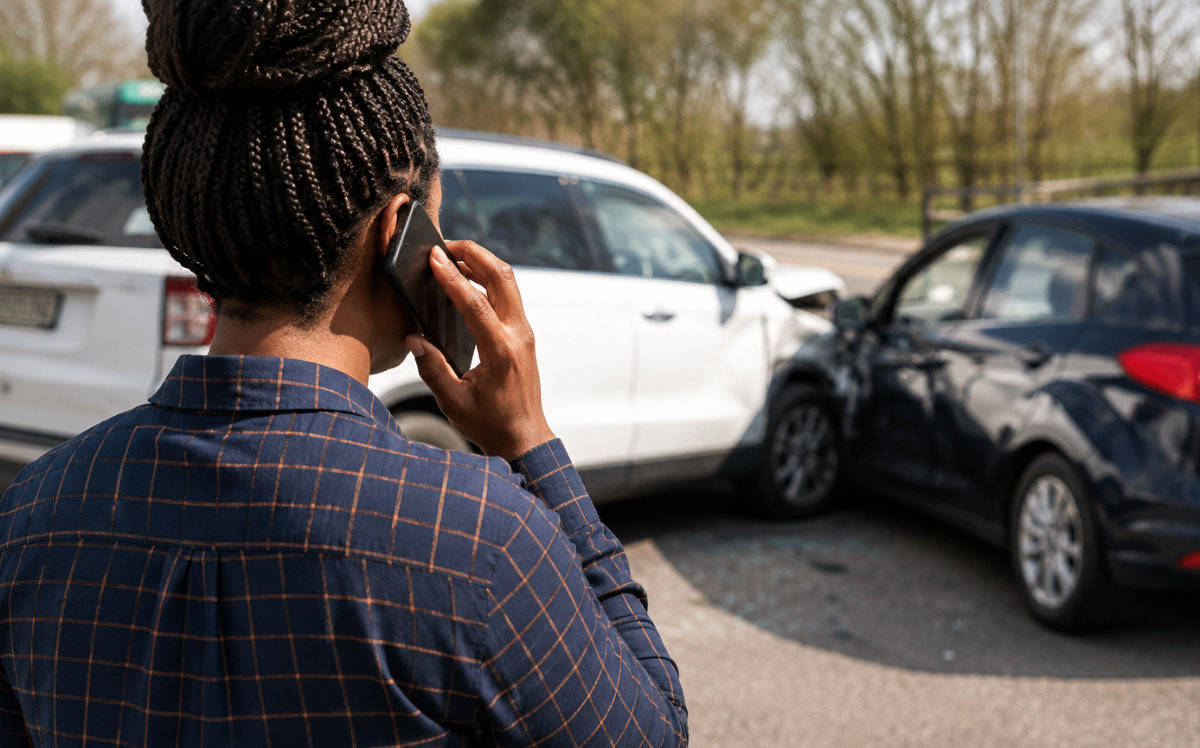
Car accidents happen unexpectedly, and the moments afterward can be confusing. Beyond checking for injuries and exchanging information, many drivers wonder whether they are legally required to report the crash. Failing to do so when required can lead to legal consequences and may complicate insurance claims or future personal injury cases.
Iowa law establishes specific situations in which a motor vehicle accident must be reported to law enforcement. Understanding these requirements can help protect both your legal rights and your ability to pursue compensation if someone else’s negligence caused your injuries. Knowing what the law expects is an important part of protecting your future.
Injured in an Iowa car crash and not sure what to do next? Reach out to a car accident lawyer at Hauptman, O’Brien, Wolf & Lathrop, LLC. Call our Council Bluffs or Sioux City offices at (712) 201-8131 or (712) 482-2717 for a free consultation.
Iowa Law Requires Certain Accidents to Be Reported
Not every fender bender requires an official accident report. However, Iowa law does require drivers to notify law enforcement whenever a crash results in injury, death, or property damage that meets certain legal thresholds. These reporting requirements are found in Iowa Code Chapter 321, which governs traffic regulations and accident reporting throughout the state.
If a report is required, drivers should notify the appropriate law enforcement agency as soon as reasonably possible. Depending on where the accident occurred, this may be the local police department, county sheriff, or the Iowa State Patrol.
Reporting an accident serves several important purposes. It creates an official record of what happened, allows officers to investigate the scene, and preserves evidence that may later become valuable if liability is disputed.
Common situations requiring a report include:
- Personal injury: Anyone involved suffers physical injuries, regardless of severity.
- Fatal accidents: A collision results in the death of any person.
- Significant property damage: Vehicle or other property damage meets the reporting threshold established under Iowa law.
- Hit-and-run accidents: One driver leaves the scene without providing required information.
Even if you believe your injuries are minor, it is often wise to notify law enforcement. Some injuries become apparent hours or even days after the collision.
What Information Should Be Included in an Accident Report?
An accident report documents much more than the basic facts surrounding a collision. Officers gather information that may later assist insurance companies, attorneys, and courts when determining liability.
Although every investigation differs, most reports include:
- Driver information: Names, addresses, driver’s license numbers, and insurance information.
- Vehicle details: License plate numbers, vehicle identification, and ownership information.
- Witness statements: Accounts from people who observed the collision.
- Road conditions: Weather, lighting, traffic signals, and roadway hazards.
- Officer observations: Physical evidence, damage patterns, and preliminary conclusions.
The police report itself does not determine legal fault. Instead, it serves as an important piece of evidence that may support your claim when combined with photographs, medical records, surveillance footage, and witness testimony.
If possible, drivers should also take photographs, exchange insurance information, and document the accident scene themselves. Small details often become important later.
How Do You Report a Car Accident in Iowa?
How you report a car accident in Iowa depends on whether law enforcement responded to the scene. If local police, a county sheriff, or the Iowa State Patrol investigated the crash, they typically handle the official reporting process for you. Still, it is smart to verify this before leaving the scene or by contacting the responding department afterward. Ask whether an official accident report will be filed and how you can obtain a copy for your insurance claim.
If no officer investigated the accident, you may need to complete the Iowa Accident Report Form, also known as Form 43303. This form can be downloaded, filled out, and printed through the Iowa Department of Transportation Accident Reports page.
Once completed, mail the form to:
Driver & Identification Services
Iowa Department of Transportation
P.O. Box 9204
Des Moines, Iowa 50306-9204
Keep a copy of the completed form for your records. You should also notify your insurance company promptly, since reporting the accident to the Iowa DOT is separate from filing an insurance claim.
What Happens If You Fail to Report a Reportable Accident?
Ignoring Iowa’s reporting requirements can create problems that extend well beyond receiving a traffic citation.
Depending on the circumstances, failing to report a qualifying accident may result in criminal penalties, driver’s license consequences, or additional complications during an insurance claim. More importantly, the absence of an official report can make it more difficult to establish what happened if the other driver later changes their version of events.
For example, imagine two drivers agree not to contact the police because the damage appears minor. A few days later, one driver begins experiencing neck pain and seeks medical treatment. Without a police report documenting the crash, the insurance company may question whether the injuries were actually caused by the collision.
Prompt reporting also helps preserve evidence while memories remain fresh. Witnesses become harder to locate over time, physical evidence disappears, and surveillance footage may be deleted within days.
Reporting the accident does not automatically mean someone will receive a citation. It simply ensures the incident is properly documented.
How Accident Reporting Can Affect Your Personal Injury Claim
Many people assume the police report alone determines whether they can recover compensation. That is not the case.
A police report is valuable because it provides objective documentation created shortly after the collision. Insurance adjusters often review these reports carefully during their investigations, particularly when fault is disputed.
Additional evidence frequently includes:
- Medical records: Connecting injuries directly to the crash.
- Photographs: Showing vehicle damage, road conditions, and visible injuries.
- Witness testimony: Supporting your version of events.
- Traffic camera footage: Capturing how the collision occurred.
- Expert analysis: Accident reconstruction specialists may evaluate complex crashes.
Iowa follows a modified comparative fault system under Iowa Code Chapter 668. In many cases, an injured person may still recover compensation if they share some responsibility for the accident, although their recovery may be reduced according to their percentage of fault. Establishing the facts early through proper reporting often helps prevent unnecessary disputes later.
Settlement negotiations are generally more productive when reliable evidence exists. Cases lacking documentation are more likely to become contested.
When Should You Speak With a Car Accident Attorney?
Not every accident requires legal representation. However, many situations benefit from experienced legal guidance, particularly when injuries are involved or liability is disputed.
You may want to consult an attorney if:
- The insurance company denies or delays your claim.
- Another driver disputes responsibility.
- You suffered significant injuries or permanent impairment.
- Multiple vehicles were involved.
- A commercial truck or government vehicle contributed to the crash.
- The insurance settlement does not fully cover your losses.
Nebraska and Iowa each have statutes of limitations that limit how long injured individuals have to file personal injury lawsuits. Waiting too long can result in losing your right to seek compensation altogether. Speaking with an attorney early allows important evidence to be preserved while witnesses and records remain available.
Our attorneys routinely investigate serious car accident claims throughout Nebraska and Iowa, helping clients understand their legal options and pursue fair compensation for their injuries.
Unsure Whether You Needed to Report Your Iowa Car Accident? Contact Us Today
If you have questions about Iowa’s accident reporting requirements or are dealing with injuries after a collision, Hauptman, O’Brien, Wolf & Lathrop, LLC is ready to help. With over 268 Years of Combined Legal Experience, our Council Bluffs and Sioux City car accident lawyers represent and provide legal help to clients throughout Iowa. We understand how quickly reporting issues, insurance disputes, and questions about fault can become overwhelming.
Our attorneys will review the circumstances of your accident, explain how Iowa law applies to your situation, and help you pursue the compensation you deserve if another party’s negligence caused your injuries. We handle the legal challenges so you can focus on your recovery.
Contact Hauptman, O’Brien, Wolf & Lathrop today for a free case review and learn how we can protect your rights and safeguard your future.


