



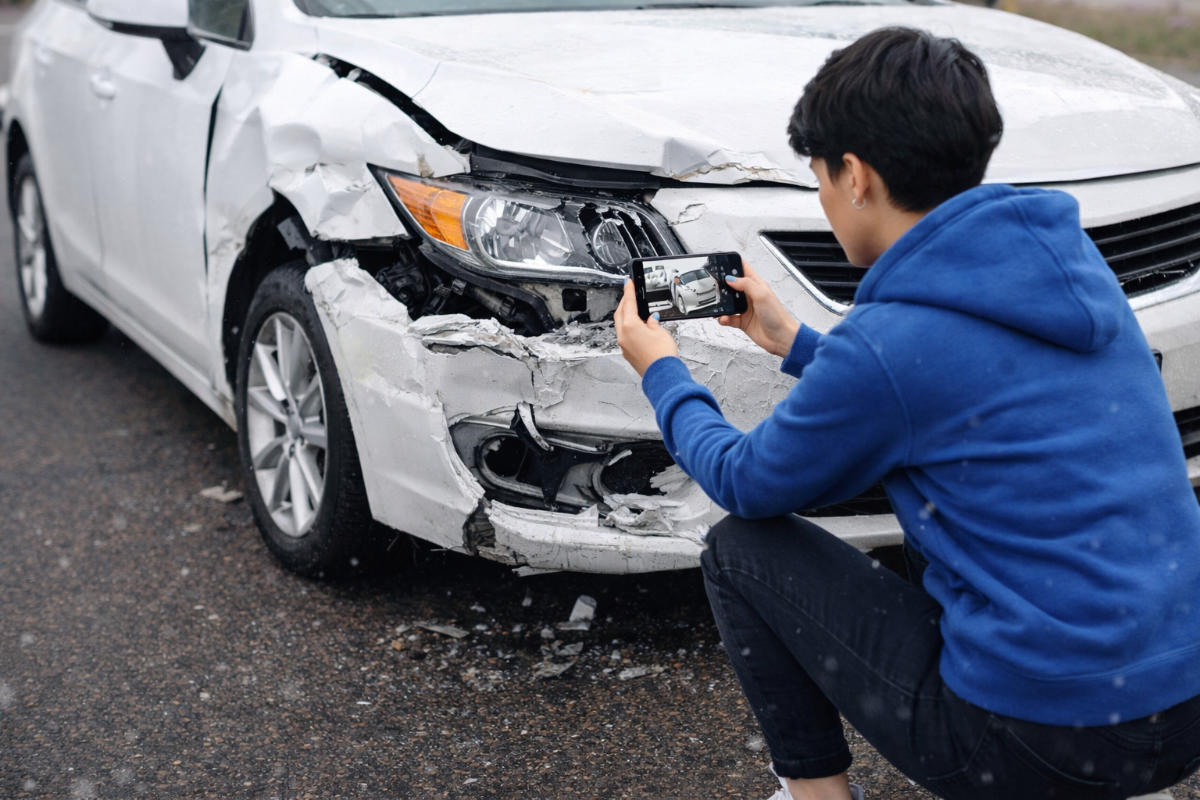
In the moments after a car accident, everything feels urgent. Sirens, traffic, adrenaline, and concern for safety naturally take priority. Still, one detail that often proves decisive later is easy to overlook at the scene: the exact position of the vehicles involved. Where each vehicle came to rest can tell a powerful story about speed, direction, right of way, and fault.
For drivers in Nebraska and Iowa, documenting vehicle position is more than a practical step; it can become critical evidence in a personal injury claim. Insurance companies, investigators, and courts rely on these details to reconstruct what happened.
Knowing how, when, and why to document vehicle position can help protect your rights if an accident leads to injuries or disputes over liability. The experienced car accident lawyers at Hauptman O’Brien can help you with preserving all the valuable evidence after the accident. Give us a call at (402) 241-5020 or contact us online for a free consultation.
Why Vehicle Position Matters in Accident Claims
Vehicle position is one of the clearest physical indicators of how a crash occurred. Skid marks fade, debris gets cleared, and memories change, but photographs and notes capturing where vehicles sat immediately after impact can preserve facts that might otherwise be lost.
From a legal perspective, vehicle positioning helps establish fault. It can support or contradict statements made by drivers and witnesses. For example, a car stopped deep in an intersection may suggest a failure to yield, while a vehicle pushed far off its lane may indicate excessive speed or an aggressive impact.
In Nebraska and Iowa, fault determinations often hinge on comparative negligence rules. If insurers argue shared responsibility, physical evidence like vehicle position becomes even more important. Accurate documentation can shorten investigations, reduce disputes, and strengthen your credibility throughout the claims process.
When It Is Safe to Document the Scene
Safety always comes first. If you or anyone else is injured, or if vehicles are in a dangerous location, your priority should be calling 911 and following emergency instructions. That said, when conditions allow, documenting vehicle position should be done as soon as possible, before cars are moved or towed.
Nebraska law generally requires drivers to move vehicles out of traffic if they can be driven safely and no serious injuries are present. This makes quick documentation especially important. A few minutes can make the difference between having clear evidence and relying solely on recollection.
If you cannot document the scene yourself due to injury, ask a passenger or a bystander to help. Even partial documentation is better than none. Police reports are valuable, but they may not capture every angle or detail relevant to a later personal injury claim.
How to Photograph Vehicle Position Effectively
Photographs are often the most persuasive form of documentation. Modern smartphones make this process accessible, but knowing what to capture matters as much as having a camera.
When taking photos, focus on context, not just damage. Wide shots help establish location and orientation, while closer images capture specific relationships between vehicles and the roadway.
Key photos to take include:
- Wide-angle shots showing all vehicles involved and their positions
- Photos showing vehicles relative to lane markings, curbs, or medians
- Images of intersections, stop signs, traffic lights, or yield signs
- Skid marks, debris fields, or fluid trails leading to or from vehicles
- Close-ups that show wheel direction and final resting angles
Take photos from multiple angles and distances. Avoid moving vehicles before documenting unless safety requires it. These images often become central exhibits during insurance negotiations or litigation.
Using Video and Panoramic Images to Add Context
Still photos are powerful, but video and panoramic images can provide additional clarity. A slow walk-around video of the scene captures spatial relationships that single photos may miss. This can be especially helpful in complex accidents involving multiple vehicles or unusual roadway layouts.
When recording video, narrate briefly if you are able. Mention the time, location, and any observations about traffic signals or road conditions. Keep commentary factual and avoid speculation about fault. The goal is documentation, not argument.
Panoramic photos can also be useful at intersections or highway ramps. They show how vehicles relate to their surroundings in a single frame. These formats often help accident reconstruction experts understand the scene more quickly and accurately.
Documenting Vehicle Position When Cars Have Been Moved
Sometimes vehicles are moved before you have a chance to document their original positions. This is common when police direct traffic or when safety concerns require clearing the roadway. While not ideal, there are still ways to preserve useful information.
If vehicles have been moved, document where they were originally located as best you can. This may include photographing skid marks, debris, or gouges in the pavement. Ask witnesses where they saw the vehicles immediately after impact and note their observations.
Additional steps you can take include:
- Marking approximate original positions in notes or sketches
- Photographing damage patterns that suggest direction of travel
- Requesting nearby surveillance footage from businesses or traffic cameras
- Obtaining the police report, which may note original positions
These efforts can help reconstruct events even when the scene has changed. In contested cases, this supplementary evidence often proves essential.
The Role of Police Reports and How They Interact With Your Documentation
Police reports play an important role in accident claims, but they are not infallible. Officers often arrive after vehicles have been moved and must rely on statements and limited physical evidence. Your documentation can complement and, at times, clarify the official report.
In Nebraska and Iowa, police reports typically include diagrams showing vehicle positions and movements. Reviewing these diagrams for accuracy is important. If something appears incorrect, your photos or videos may provide grounds for clarification during the claims process.
It is also worth noting that police reports are not final determinations of civil liability. They are one piece of evidence among many. Well-documented vehicle positions can carry significant weight when insurers or courts assess what actually happened.
How Vehicle Position Affects Fault and Comparative Negligence
Vehicle position often becomes central when fault is disputed. For example, in a left-turn collision, the final resting place of vehicles can indicate whether a turning driver misjudged oncoming traffic or whether the other driver was speeding.
Nebraska follows a modified comparative negligence rule. An injured party can recover damages only if they are less than 50 percent at fault. Iowa uses a similar threshold at 51 percent. Because of this, insurers frequently argue that both drivers share blame.
Clear documentation of vehicle position helps counter unsupported claims of shared fault. It provides objective evidence that can support accident reconstruction and expert analysis. In many cases, this evidence leads to more favorable settlements and avoids prolonged litigation.
Common Mistakes to Avoid When Documenting Vehicle Position
Even well-intentioned drivers sometimes undermine their own claims through simple mistakes. Understanding what not to do is just as important as knowing what to document.
Common errors include:
- Taking only close-up damage photos without showing vehicle location
- Failing to capture traffic control devices or road markings
- Deleting photos or videos that seem unimportant at the time
- Making speculative comments about fault while recording
- Relying solely on police documentation
Avoid editing or altering images. Preserve original files whenever possible. Consistency and authenticity matter, especially if your case proceeds to litigation.
How Documentation Fits Into the Personal Injury Claims Process
Documenting vehicle position is one step in a broader legal process. After an accident, injured individuals typically move through several stages, from medical treatment to insurance claims and, in some cases, litigation.
The process often unfolds as follows:
- Initial consultation with a personal injury attorney
- Collection and review of evidence, including vehicle position documentation
- Investigation and accident reconstruction
- Negotiation with insurance companies
- Litigation if a fair settlement cannot be reached
Strong early documentation can streamline this process. It reduces uncertainty, strengthens negotiation positions, and helps attorneys present a clear narrative supported by facts.
Why Vehicle Position Is Especially Important in Serious Injury Cases
In cases involving catastrophic injuries or wrongful death, vehicle position evidence becomes even more significant. High-stakes claims attract intense scrutiny from insurers and defense attorneys. Every detail is examined.
Accident reconstruction experts often rely heavily on vehicle positioning to calculate speed, angles of impact, and forces involved. These calculations influence damage assessments and settlement values. Without accurate documentation, experts may be forced to rely on assumptions, which can weaken a case.
For families facing long-term medical needs or loss of income, these details are not technicalities; they are building blocks of accountability and recovery.
Protect Your Rights and Your Car Accident Claim With Hauptman O’Brien
Documenting vehicle position after an accident may feel secondary in the moment, but it often shapes the outcome of an injury claim. Clear, timely evidence can prevent disputes, counter insurance tactics, and support full compensation for your losses.
Hauptman, O’Brien Personal Injury Lawyers have spent decades helping accident victims across Nebraska and Iowa protect their rights. With offices in Omaha, South Omaha, Bellevue, Lincoln, Council Bluffs, and Sioux City, the firm understands how local roads, laws, and insurers operate.
If an accident has left you injured and uncertain about what comes next, our experienced car accident attorneys can step in. From evaluating evidence to handling negotiations and litigation, their team works to ensure that critical details like vehicle position are used effectively to safeguard your future.
Call us today at (402) 241-5020 or contact us online for a free consultation. There’s no fee unless we win your case.


