



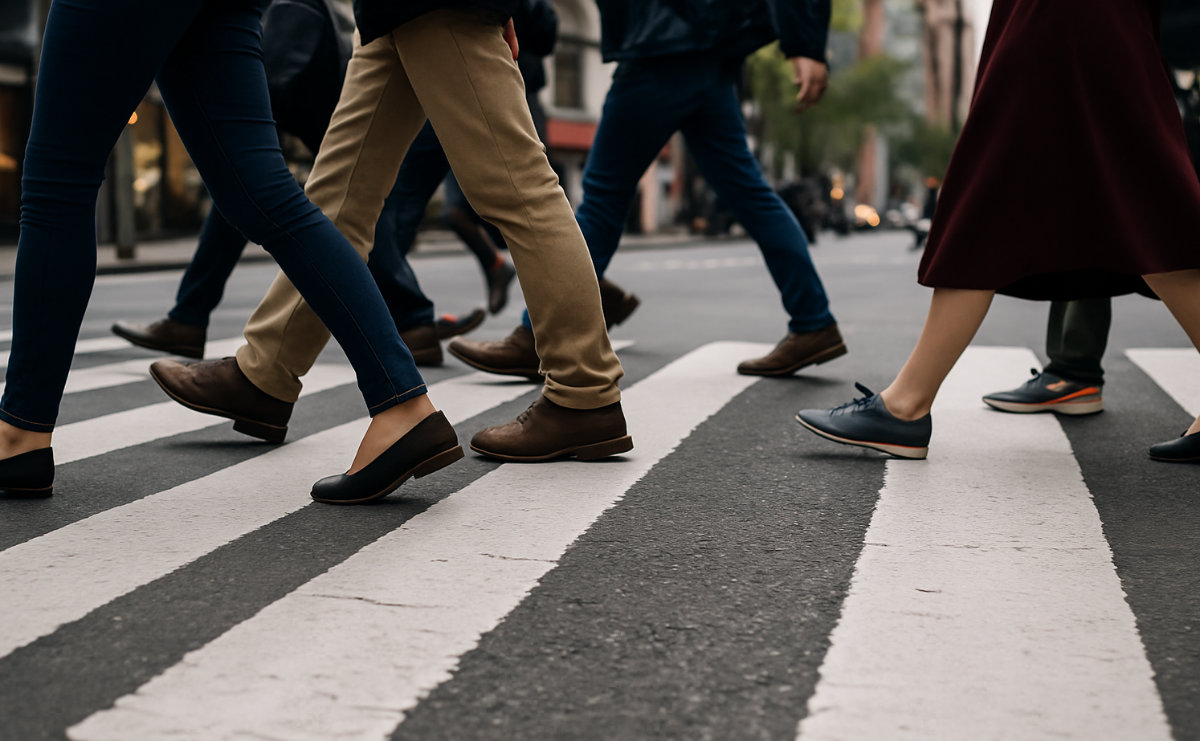
Pedestrians walk a unique line in Iowa. They share streets and intersections with larger, faster, and often distracted vehicles, which means the law gives them specific protections. Yet many Iowans don’t fully understand what those protections are or how they work when an accident happens.
Knowing your rights can influence everything from how you cross a street to how strongly you can pursue compensation after a driver injures you. At Hauptman, O’Brien, we see every day how clarity helps injured pedestrians regain control and confidence after a crash.
Pedestrians’ Right of Way in Iowa
Iowa law offers strong right-of-way protections to pedestrians, but it also expects pedestrians to act responsibly. The most basic rule is simple: when a pedestrian is in a marked crosswalk or an unmarked crosswalk at an intersection, vehicles must stop and allow that pedestrian to cross. This is true even if a driver thinks they have enough room to slip through. In practice, hesitation or misjudgment from a driver can quickly turn into a catastrophic collision.
Right of way is not just a legal phrase. It’s an obligation backed by state statutes designed to prevent avoidable injuries. Drivers are expected to slow down as they approach intersections, anticipate foot traffic, and remain vigilant in areas where pedestrians commonly enter the roadway. Iowa’s rules also acknowledge that pedestrians are more vulnerable than anyone in a vehicle, so motorists bear a heightened responsibility to keep intersections safe.
That said, pedestrians must also avoid stepping abruptly into traffic or crossing against pedestrian control signals. When both parties respect their roles, intersections stay safer. Yet many crashes happen because a driver simply fails to yield. When that occurs, Iowa law allows injured pedestrians to pursue claims for medical care, lost income, and a range of other losses. Hauptman, O’Brien helps ensure that those rights are respected and enforced.
Crosswalks and Safety Obligations
Crosswalks are the legal “safe zones” for people traveling on foot. This applies to clearly painted crosswalks, but it also applies to unmarked crossings at intersections. Iowa law treats both with nearly the same level of protection. When a pedestrian steps into a crosswalk, a driver must stop, period. Unfortunately, many drivers approach crosswalks too quickly or fail to notice pedestrians waiting on the curb.
Some of the most important legal expectations in Iowa include:
- Drivers must come to a full stop for pedestrians in any crosswalk.
- Motorists cannot overtake another car that is stopped at a crosswalk.
- Pedestrians should obey crossing signals when present.
- Drivers must use extra caution in school zones and pedestrian-heavy areas.
- Vehicles must yield to pedestrians on sidewalks and paths when turning.
- Pedestrians may cross at unmarked intersections with the same right of way as marked crosswalks.
Crosswalk collisions often stem from driver inattention. A driver looking at navigation, adjusting music, or checking mirrors at the wrong moment can cause a life-changing injury. Iowa law recognizes this reality and gives pedestrians clear rights that can be enforced in a claim after an accident. Our team often reminds clients that understanding these rules is not only practical but empowering.
Shared Spaces and Pedestrian Safety
Pedestrian safety isn’t limited to intersections. Iowa’s towns and cities increasingly use shared spaces such as mixed-use paths, pedestrian-priority zones, and areas where vehicles move slowly alongside foot traffic. These environments blend convenience with risk. Drivers might assume lower speeds reduce danger, yet even slow-moving vehicles can cause severe injuries when they fail to notice a person walking or jogging nearby.
Shared spaces come with shared responsibilities. Pedestrians should remain aware of turning vehicles, especially near driveways, alleys, and parking lots. Motorists must approach these areas with caution and continually scan for people who may not instantly register in their field of vision.
Iowa law also emphasizes that a pedestrian on a sidewalk or path has priority when a vehicle is entering or exiting private property. Drivers must yield and ensure a clear path before moving forward. This rule is essential near businesses, residential developments, and downtown areas where foot traffic is a part of daily life.
As cities across Iowa evolve their walkability and transportation design, the importance of these shared-space rules becomes even more significant. For pedestrians injured in these areas, legal protections are strong, but navigating insurance claims can still be challenging. Hauptman, O’Brien steps in to guide victims through that process, ensuring they aren’t blamed unfairly or pressured into low settlements.
Jaywalking and How It Affects Legal Rights
Jaywalking is one of the most misunderstood issues in pedestrian law. In Iowa, jaywalking generally refers to crossing the street outside a designated crosswalk or against a signal. It doesn’t automatically make a pedestrian liable for an accident. Instead, the law looks at whether a pedestrian acted reasonably and whether the driver had an opportunity to avoid the crash.
Many pedestrian accidents occur even when the person on foot was not jaywalking at all. Still, drivers and insurance companies often bring it up as a defense. They may argue that a pedestrian’s actions contributed to the collision, even if the driver was speeding or distracted. Iowa’s comparative fault system means the pedestrian’s compensation can be reduced if they are found partly at fault, but it does not prevent them from recovering damages unless their share of fault exceeds 50 percent.
Consider these points when thinking about jaywalking and your rights:
- Jaywalking does not eliminate your ability to seek compensation.
- Drivers still have a duty to keep a proper lookout.
- A driver’s negligence can outweigh a pedestrian’s mistake.
- The specifics of where and how the crossing occurred matter greatly.
- Video evidence, skid marks, and witness statements often play a major role.
- Injured pedestrians should avoid making statements that assume blame.
At Hauptman, O’Brien, we work to ensure that a pedestrian isn’t unfairly penalized for a momentary decision, especially when a driver’s choices were far more dangerous.
Liability in Iowa Pedestrian Accidents
Determining fault in a pedestrian accident can be straightforward or surprisingly complex. Many people assume the driver is always liable, but Iowa follows a modified comparative fault system. This means liability can be shared between parties depending on the details of the crash. A pedestrian may be assigned a percentage of fault if they crossed outside a crosswalk or ignored a signal. However, the driver often still bears the majority of responsibility, especially when they were speeding, distracted, or failed to keep a proper lookout.
Key factors that may influence liability include:
- Whether the driver failed to yield at a crosswalk or intersection
- Evidence of distracted driving such as texting or phone use
- Visibility conditions and whether the driver exercised reasonable caution
- Whether the pedestrian followed traffic control signals
- Driver speed relative to the posted limit
- Whether alcohol or drugs contributed to the driver’s behavior
- Statements from witnesses or nearby video footage
Insurance companies often seize on any opportunity to shift blame onto the pedestrian. This is one reason legal representation matters. When an injured person works with Hauptman, O’Brien, they gain a team that understands how insurers operate and how to push back effectively. Our goal is to ensure liability is assigned fairly and that you receive the full value of your claim.
Legal Options for Injured Pedestrians
After a pedestrian accident, the law gives victims the right to pursue compensation for the harm they’ve suffered. This typically begins with a claim against the at-fault driver’s insurance policy. However, insurance companies are rarely quick to honor the full value of a pedestrian’s losses. They may challenge medical treatment, downplay long-term effects, or argue that injuries were preexisting.
Seeking legal guidance early often makes a significant difference. A personal injury attorney can review police reports, gather evidence, consult experts, and negotiate firmly on your behalf. For many injured pedestrians, this support becomes a lifeline during a stressful recovery.
Your potential compensation may include:
- Medical expenses, both current and future
- Physical therapy and rehabilitation
- Lost wages or reduced earning capacity
- Pain and suffering
- Emotional distress
- Disability-related expenses
- Travel for medical care
- Property damage, such as broken personal items
If the driver’s insurer refuses to act fairly, your attorney can file a lawsuit and bring the case to court. This is where our team’s decades of combined experience becomes invaluable. We have long been recognized in the region for standing firm against insurers who attempt to minimize the harm our clients have suffered. For readers looking for a related perspective, Hauptman, O’Brien also provides a detailed guide for Nebraska residents on similar issues, available in our Nebraska pedestrian rights article.
Compensation and What Injured Pedestrians Can Recover
Pedestrian injuries often come with a cascade of costs. Beyond immediate emergency care, there can be surgeries, ongoing therapy, lost income, and long-term physical limitations. Iowa law allows injured pedestrians to recover compensation that reflects the full scope of their losses, not just the immediate bills.
Economic damages account for measurable financial impacts. Non-economic damages capture the human side of the injury. Both matter because they shape how your life changes after the accident.
Recoverable damages may include:
- Hospital bills, surgeries, and follow-up care
- Costs for mobility aids or home modifications
- Wage loss from missed work
- Reduced ability to work in the future
- Psychological trauma and anxiety related to the crash
- Physical pain during the recovery process
- Long-term disability or disfigurement
We often remind clients that their claim is not about “profiting” from an accident. It is about restoring stability, independence, and dignity. Iowa law gives pedestrians the right to seek every dollar necessary to rebuild after a driver’s negligence disrupts their life. Hauptman, O’Brien ensures that this right is honored.
Contact an Iowa Pedestrian Accident Attorney Today
If you or a loved one has been hurt while walking in Iowa, you deserve legal support from a team that knows how to protect your rights. Hauptman, O’Brien Personal Injury Lawyers has built a reputation throughout the region for standing strong for injured pedestrians. With offices in Council Bluffs and Sioux City, our team is positioned to support clients throughout western Iowa with compassion and tenacity.
We understand that every pedestrian accident affects more than just the injured person. Families, workplaces, and routines all feel the impact. Our attorneys are here to help you reclaim control, pursue fair compensation, and begin moving forward with confidence. Contact us today for a free consultation and let our experience work for you.







This was the 1st time I’ve ever had to use this type of service. Hands down would recommend this team for all your injury needs. They were professional, made sure everything was understood and was by my side step by step. I really felt like they were in my corner at all times!
Kathryn Hartnett went above and beyond to meet my needs as a unexpected life change happened. Everyone from the front desk to the back where amazing! Thank you so much!