



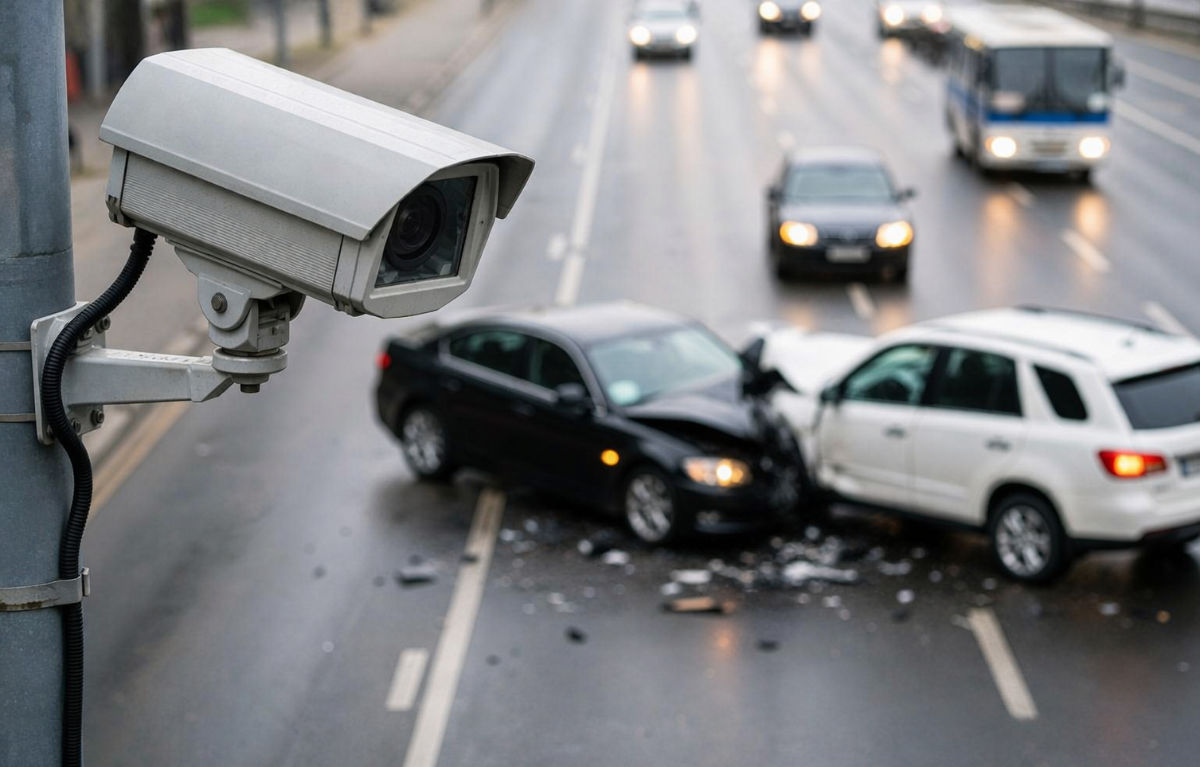
After a car accident, the story of what happened can change fast. Drivers remember things differently, witnesses leave the scene, and insurance companies start forming opinions within days. That is why video footage, whether from a traffic camera or a nearby business, can be one of the strongest pieces of evidence in an injury claim.
But there’s a catch: most camera footage is not saved forever. Many systems automatically record over video within days. If you wait too long, the proof you need may be erased before you even know it exists. Knowing how to request and preserve footage quickly can make a major difference in the outcome of your case.
Why Video Footage Matters More Than People Realize
Video evidence is often the closest thing to an “unbiased witness.” It can show how a collision occurred, whether a driver ran a light, how fast traffic was moving, and even what a person was doing moments before impact. In many cases, footage settles the biggest dispute in a claim: who caused the crash.
That matters because insurance adjusters are trained to look for ways to shift blame. If they can argue you were partially at fault, they may try to reduce your compensation. In Nebraska, this is especially important because Nebraska follows a modified comparative negligence rule; if you are found 50% or more at fault, you can be barred from recovering damages. Video can be the difference between a fair settlement and a denial.
It also helps with more than fault. Footage may show the severity of the impact, the position of vehicles, or whether a driver fled the scene. Those details can influence claim value, not just liability.
The Two Main Types of Footage: Business Cameras vs. Government Traffic Cameras
Not all video sources work the same way, and this is where people often lose time. There is a big difference between requesting footage from a private business and requesting it from a city or state agency.
Business security footage usually comes from:
- Gas stations and convenience stores
- Grocery stores and strip malls
- Restaurants and bars
- Apartment complexes
- Banks and ATMs
- Warehouses and commercial parking lots
These systems often capture wide-angle views, including streets and intersections. Many business owners will cooperate, but they are not required to unless compelled through legal channels.
Traffic camera footage may come from:
- City traffic management systems
- State highway camera networks
- Department of Transportation monitoring
- Temporary construction-zone cameras
Here’s the tricky part: many traffic cameras are not designed to record. Some are live-feed cameras used for traffic monitoring. Others record only in limited circumstances. So even if you know there was a camera nearby, that does not automatically mean footage exists.
A law firm with local experience in Nebraska and Iowa usually knows which agencies record, which ones don’t, and how to get the request into the right hands before the data disappears.
Act Quickly: Most Footage Is Deleted Within Days
The most common reason people cannot get footage is simple: it’s already gone.
Most private security systems record over footage automatically. Depending on the business, the storage window could be as short as 24 to 72 hours. Even systems with larger hard drives may only keep footage for 7 to 14 days. Some keep it longer, but you should never count on that.
Government footage can also be time-sensitive. Some agencies have strict retention schedules, and others treat footage as non-recorded unless specifically archived.
If you are physically able after the crash, it helps to do a quick scan of the area for cameras. Look at the corners of buildings, parking lot poles, and entrances. A lot of useful cameras are not obvious until you are looking for them.
If you can safely do it, gather:
- The names of nearby businesses
- The address of each business
- The approximate direction the camera is facing
- The exact time of the crash (down to the minute if possible)
This is one of those moments where “I’ll handle it later” can quietly destroy your case.
How to Request Footage From a Business (And What to Say)
Many people assume they can simply call a business and ask for video. Sometimes that works. But it often fails because the person you speak with does not have authority, does not want involvement, or does not understand what you are asking for.
A smarter approach is to treat it like a professional evidence request, even if you are doing it informally at first.
When requesting footage from a business, keep it polite and specific. You are more likely to get help if you sound organized and reasonable, not frantic.
Include these details:
- Date and exact time range (example: 2:10 p.m. to 2:25 p.m.)
- Exact location (intersection, parking lot entrance, street)
- Description of vehicles involved
- Your contact information
- A request that they preserve the footage even if they cannot provide it immediately
If the business is willing to provide it, ask how they can share it. Some can export a clip to a USB drive; others can email a link or save it to a cloud file.
One practical warning: businesses sometimes provide video in a format that is hard to open. If you do get footage, do not edit it, trim it, or rename it repeatedly. Save a clean copy. Preserving “chain of custody” is not just courtroom talk; it’s how you prevent the other side from claiming the video is unreliable.
When You Need a Lawyer: Preservation Letters, Subpoenas, and Legal Pressure
If a business refuses, or if you suspect the footage is critical, this is where legal tools come in. People are often surprised to learn that you cannot always force a business to hand over video just because you were in a crash nearby.
However, a law firm can take steps to legally protect the footage and pursue it through proper channels.
Common legal methods include:
- Spoliation or preservation letters (a formal notice demanding the footage be preserved)
- Subpoenas (a legal order requiring production of evidence, usually after a lawsuit is filed)
- Court motions if a party is intentionally destroying evidence
- Formal records requests when dealing with government agencies
A preservation letter is often the first move because it creates a paper trail. If a business deletes footage after being notified, that can create serious legal consequences. It can also strengthen your claim because it suggests evidence was lost that may have supported your version of events.
This is one of the reasons injury cases sometimes move slowly. Even when liability seems obvious, attorneys may spend weeks tracking down video, sending preservation notices, and following up with multiple entities to secure footage before it disappears.
Getting Traffic Camera Footage in Nebraska and Iowa: What’s Actually Possible
Traffic camera footage sounds straightforward, but it rarely is. Nebraska and Iowa have a mix of city-run systems, state systems, and live-feed monitoring. Some cameras record; many do not. Some record only for internal use. Others keep footage only temporarily.
In Omaha, Lincoln, Council Bluffs, and Sioux City, there are cameras used for traffic management, but availability varies. Construction zones may also have temporary cameras, and those can be controlled by contractors rather than the city.
In many cases, you or your attorney may need to identify:
- Which agency owns the camera
- Whether it records or is live-feed only
- Whether the footage is archived
- How long the retention period is
- What form of request is required
For government-held footage, a public records request may be possible. But there are limits. Agencies can deny requests based on privacy rules, ongoing investigations, or other legal exemptions.
Even when footage exists, it is not always released quickly. Government timelines and internal procedures can slow the process, which is why early action matters.
If you are dealing with a serious injury claim, waiting for “the city to get back to you” is not a strategy. It’s a gamble.
How Video Fits Into a Car Accident Case: Settlement vs. Trial
Footage can shape your case from the very first consultation through negotiation and, if needed, trial. It often changes how an insurance company evaluates risk.
Here’s the practical difference video makes:
- Without footage, your case may depend on conflicting statements, a police report, and witness memories.
- With footage, you can show the adjuster exactly what happened, which reduces their ability to argue.
Video can speed up settlement discussions because it narrows the dispute. Insurance companies tend to settle faster when they know a jury would likely see clear evidence of fault.
That said, video does not automatically guarantee a settlement. Sometimes footage is grainy, incomplete, or only shows part of the crash. In those situations, attorneys combine it with other evidence, such as:
- Vehicle damage patterns
- Event data recorder (black box) information
- Cell phone records (in distracted driving cases)
- Witness testimony
- Medical documentation connecting injuries to the crash
If a case goes to trial, video becomes even more valuable. Trials are not won by who speaks louder; they are won by evidence that holds up under scrutiny. A clean, preserved clip can be a powerful tool in front of a jury.
Common Mistakes That Can Cost You the Footage (And Your Claim)
Most people do not lose video evidence because they did something reckless. They lose it because they did what felt normal: they waited, assumed it would be available later, or trusted the insurance company to handle it.
Here are mistakes that come up again and again:
- Waiting more than a few days to start looking for cameras
- Assuming traffic cameras automatically record crashes
- Calling a business but not following up in writing
- Failing to request preservation of the footage
- Relying on the other driver’s insurance company to gather evidence
- Accepting a quick settlement before evidence is fully collected
- Not documenting the time of the crash precisely
There’s also a deeper issue people don’t talk about enough: when evidence is missing, insurers fill in the blanks in whatever way benefits them. If the video is gone, they may argue you contributed to the crash, or that your injuries are unrelated, or that the impact was minor.
That is why early legal guidance is not about being “aggressive.” It’s about preventing avoidable damage to your case.
How Hauptman, O’Brien Personal Injury Lawyers Can Help You Secure the Footage You Need
Obtaining camera footage after a crash is not just a task; it’s part of building a case that can withstand an insurance company’s pushback. When you work with Hauptman, O’Brien Personal Injury Lawyers, you are not just hiring someone to file paperwork. You are hiring a team that knows how to investigate quickly, preserve evidence, and apply legal pressure when needed.
With offices in Omaha, South Omaha, Bellevue, Lincoln, Council Bluffs, and Sioux City, Hauptman O’Brien understands the local landscape in Nebraska and Iowa, including how evidence requests are handled and how quickly video can disappear. That local familiarity matters when time is short and the stakes are high.
Get in Touch With a Car Accident Attorney at Hauptman, O’Brien Today
If you were injured in a car accident, do not assume the footage will still be there next week. The earlier you act, the better your chances of securing video that can prove fault, protect your claim, and support full compensation for your injuries.
Hauptman O’Brien offers a free case review, prompt responsiveness, and personal service. If you want help preserving business surveillance footage, identifying traffic camera sources, and building a strong injury claim from day one, contact Hauptman, O’Brien Personal Injury Lawyers and let the legal team start protecting your rights and safeguarding your future.







This was the 1st time I’ve ever had to use this type of service. Hands down would recommend this team for all your injury needs. They were professional, made sure everything was understood and was by my side step by step. I really felt like they were in my corner at all times!
Kathryn Hartnett went above and beyond to meet my needs as a unexpected life change happened. Everyone from the front desk to the back where amazing! Thank you so much!