



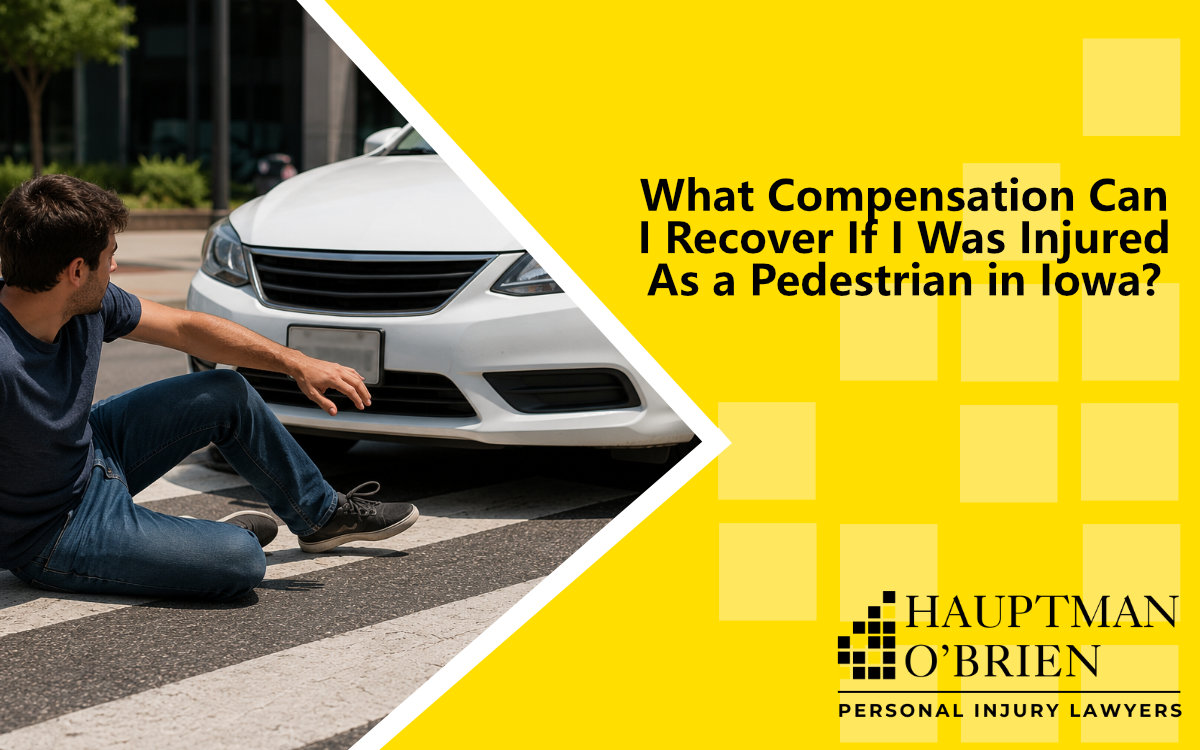
Pedestrian accidents often lead to severe, life-altering injuries. Unlike drivers, pedestrians have no physical protection, which means even low-speed collisions can result in significant medical bills, time away from work, and long-term physical limitations. If you were injured by a negligent driver while walking in Iowa, understanding what compensation you may be entitled to is a critical step toward rebuilding your life.
Our pedestrian accident lawyers at Hauptman, O’Brien, Wolf & Lathrop, LLC help injured individuals across Iowa pursue the full value of their claims. These cases are not just about financial recovery; they are about restoring stability, dignity, and peace of mind after a traumatic event. Contact our Council Bluffs or Sioux City lawyers for a free consultation.
Understanding the Types of Compensation Available in Iowa Pedestrian Accident Claims
In Iowa, injured pedestrians may recover compensation through a personal injury claim based on negligence. Under Iowa law, drivers have a duty to exercise reasonable care, particularly around crosswalks and intersections, as outlined in Iowa Code Section 321.327. When that duty is violated, the injured party may pursue damages.
Compensation generally falls into two categories: economic and non-economic damages.
- Medical expenses: Costs for emergency care, hospital stays, surgeries, and rehabilitation.
- Lost wages: Income lost due to time away from work during recovery.
- Future earning capacity: Compensation if your injuries limit your ability to work long-term.
- Pain and suffering: Physical discomfort and emotional distress caused by the accident.
- Loss of enjoyment of life: Impact on your ability to engage in daily activities and hobbies.
In more severe cases, such as those involving traumatic brain injuries or permanent disabilities, the total compensation can be substantial. Each case is unique, and the specific damages available depend on the facts surrounding your accident and recovery.
What Determines the Value of Your Iowa Pedestrian Accident Claim
The value of your claim is not determined by a single factor; it is the result of several interconnected elements. Insurance companies and courts evaluate both tangible losses and the broader impact of your injuries.
Severity of Injuries
More serious injuries typically lead to higher compensation. For example, a broken leg requiring surgery will generally result in a higher claim value than minor bruising.
Medical Treatment and Costs
The extent and duration of your medical care play a significant role. Ongoing treatments, physical therapy, or long-term care needs increase the overall value of your claim.
Impact on Daily Life
If your injuries prevent you from working, caring for your family, or enjoying normal activities, that impact is factored into your compensation.
Liability and Fault
Iowa follows a modified comparative fault rule under Iowa Code Section 668.3. If you are found partially at fault, your compensation may be reduced proportionally. If you are more than 50 percent at fault, you may not recover damages at all.
Strength of Evidence
Clear evidence, such as witness statements or surveillance footage, can strengthen your case and improve your negotiating position.
Understanding these elements helps set realistic expectations and informs the strategy we develop for each client.
Key Factors That Can Reduce the Value of Your Pedestrian Accident Claim
While many factors can increase the value of your claim, others may diminish it. Being aware of these risks allows you to avoid common pitfalls.
- Delayed medical treatment: Waiting to seek care can raise questions about the severity of your injuries.
- Inconsistent statements: Contradictory accounts of the accident can weaken credibility.
- Partial fault: Crossing outside a designated crosswalk may reduce your compensation under Iowa’s comparative fault rules.
- Pre-existing conditions: Insurance companies may argue your injuries were not caused by the accident.
- Lack of documentation: Missing medical records or evidence can make it harder to prove your claim.
Even seemingly minor issues can have a measurable impact on your case. For instance, failing to follow a doctor’s treatment plan may allow insurers to argue that your injuries are not as serious as claimed.
Working with experienced legal counsel helps ensure these factors are addressed proactively. Our attorneys carefully manage documentation, communication, and case strategy to protect the value of your claim.
How Long Do Pedestrian Accident Claims Take to Settle in Iowa?
The timeline for resolving a pedestrian accident claim varies depending on several factors. Some cases settle within a few months, while others may take a year or longer, particularly if litigation is required.
A typical claim follows several stages:
- Initial consultation: Reviewing the details of your accident and injuries.
- Investigation: Gathering evidence, medical records, and witness statements.
- Demand and negotiation: Presenting your claim to the insurance company and negotiating a settlement.
- Litigation, if necessary: Filing a lawsuit if a fair settlement cannot be reached.
One key consideration is whether to settle or proceed to trial. Settlements are generally faster and provide certainty, but they may result in lower compensation. Trials, on the other hand, allow for a full presentation of evidence but require more time and resources.
Delays can also occur if liability is disputed or if medical treatment is ongoing. In many cases, it is advisable to wait until you reach a stable medical condition before finalizing a claim, as this ensures all damages are accounted for.
Can I Still Be Compensated if I Was Injured in a Hit-and-Run?
Yes, you may still recover compensation even if the driver who hit you cannot be identified. While hit-and-run cases present unique challenges, there are alternative avenues for recovery.
One option is uninsured motorist (UM) coverage. In Iowa, insurance policies often include UM coverage, which can apply when the at-fault driver is unknown or uninsured. This coverage can help pay for medical expenses, lost wages, and other damages.
Additionally, other potential sources of compensation may include:
- Personal insurance policies: Health insurance or MedPay coverage.
- Third-party liability: Claims against other responsible parties, such as property owners or municipalities.
- Crime victim compensation programs: In certain cases, state programs may provide financial assistance.
For example, if a pedestrian is struck near a poorly maintained roadway or malfunctioning traffic signal, there may be grounds for a claim against a government entity. These cases involve additional legal considerations, including strict notice requirements.
Hit-and-run cases often require thorough investigation and creative legal strategies. Our attorneys work to identify all possible sources of recovery to ensure clients are not left without options.
Building a Strong Pedestrian Accident Claim in Iowa
A successful pedestrian accident claim requires more than proving that an accident occurred; it requires demonstrating how that accident has affected your life. This involves careful documentation, strategic planning, and effective advocacy.
Key steps in building a strong claim include:
- Collecting evidence: Photographs, witness statements, and surveillance footage.
- Documenting injuries: Medical records, treatment plans, and expert opinions.
- Calculating damages: Assessing both current and future losses.
- Negotiating with insurers: Advocating for fair compensation.
- Pursuing litigation if needed: Presenting your case in court when necessary.
Each step plays a role in shaping the outcome of your case. For example, strong medical documentation can directly influence settlement negotiations, while expert testimony may be critical in contested cases.
The difference between a contested and uncontested claim often comes down to preparation. When the evidence is clear and well-organized, insurers are more likely to offer reasonable settlements. When disputes arise, having a solid legal strategy becomes even more important.
Recover the Full Compensation You Deserve With Hauptman, O’Brien, Wolf & Lathrop
If you were injured as a pedestrian in Iowa, understanding your right to compensation is only the beginning. At Hauptman, O’Brien, Wolf & Lathrop, LLC, we are committed to helping you pursue the full value of your claim while protecting your rights every step of the way. With over 298 years of combined legal experience, we know how to handle even the most complex pedestrian accident cases.
You do not have to face this process alone. Contact us today for a free consultation to discuss your case and explore your legal options. We work on a contingency basis, which means you pay nothing unless we recover compensation for you. Let us help you move forward with confidence and security.


