



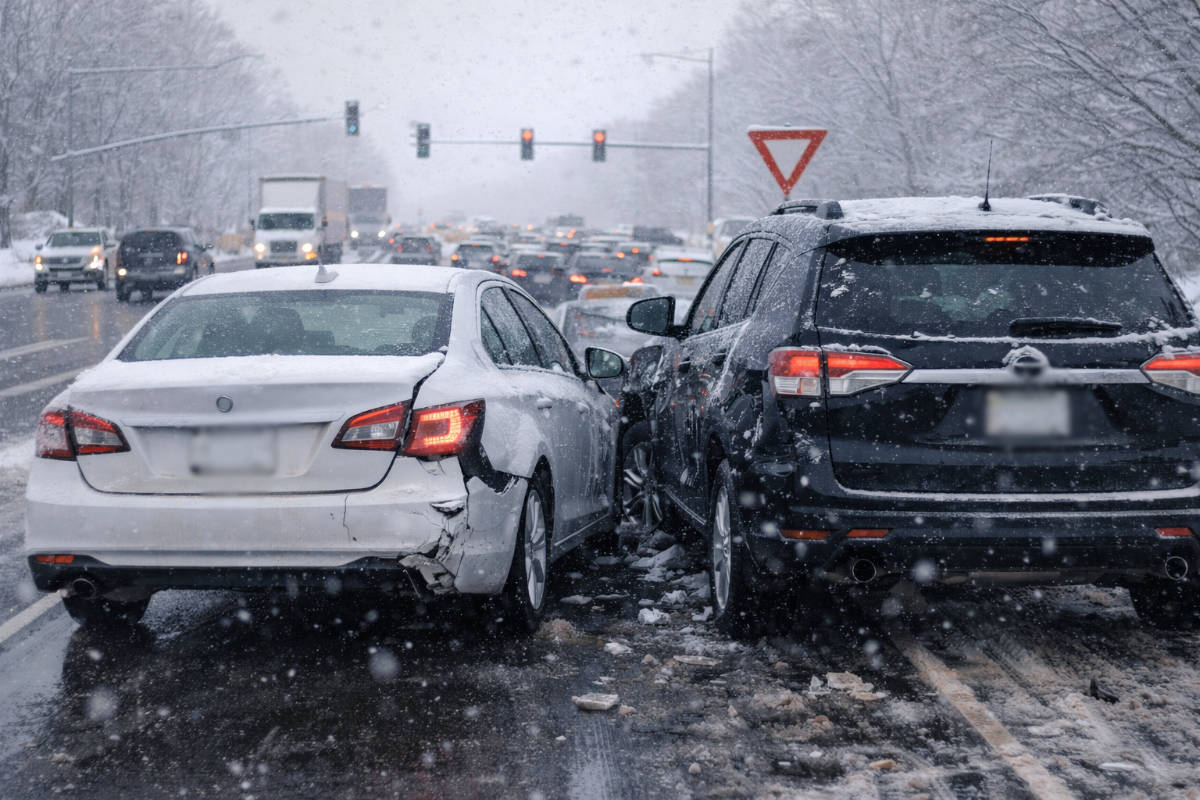
Failure to yield is one of the most common causes of serious traffic accidents in Nebraska. These crashes often happen in moments that feel ordinary: a left turn at an intersection, a merge onto a highway, a pedestrian stepping into a crosswalk. When one driver misjudges right of way or ignores it altogether, the consequences can be immediate and severe.
For injured victims, failure to yield accidents raise complex legal questions about fault, shared responsibility, and compensation. Nebraska law sets clear expectations for drivers, but applying those rules after a crash requires careful analysis. Understanding how failure to yield laws work is essential not only for safer driving, but also for protecting your rights if you are hurt due to another driver’s mistake.
If you’ve been injured in an accident due to another motorist’s failure to yield, don’t hesitate to contact the experienced car accident attorneys at Hauptman O’Brien.
What “Failure to Yield” Means Under Nebraska Law
Under Nebraska traffic law, yielding means slowing down or stopping when required so another vehicle, cyclist, or pedestrian can proceed safely. Failure to yield occurs when a driver disregards that obligation and causes a collision or forces another road user into an unsafe maneuver.
Nebraska statutes address yielding in several specific contexts, including intersections, left turns, pedestrian crossings, and highway merges. These rules are not suggestions; they establish a legal duty of care. When that duty is breached and someone is injured, negligence may be established.
Failure to yield is often misunderstood as a minor traffic infraction. In reality, it is a leading cause of T-bone collisions, pedestrian strikes, and motorcycle crashes. Because these impacts often involve side or frontal collisions, injuries tend to be more serious. From a legal perspective, this makes failure to yield cases especially significant in personal injury litigation.
Common Failure to Yield Scenarios That Lead to Accidents
Failure to yield can occur in many everyday driving situations. Some are obvious, others less so, which is why these cases are frequently disputed by insurance companies.
Common scenarios include:
- Turning left in front of oncoming traffic at an intersection
- Failing to stop or slow at a stop sign or yield sign
- Not yielding to pedestrians in marked or unmarked crosswalks
- Merging onto highways without allowing through traffic to pass
- Pulling out of driveways or private roads into active traffic
Each situation carries its own legal expectations. For example, a driver turning left generally must yield to oncoming vehicles traveling straight. A driver entering a roadway from a parking lot or alley almost always bears the duty to yield. Understanding these distinctions is crucial when determining fault after an accident.
Intersections, Stop Signs, and Right-of-Way Rules
Intersections are the most common setting for failure-to-yield crashes in Nebraska. The rules governing right-of-way depend on traffic control devices and road design. When traffic signals are present, drivers must obey them strictly. At stop sign intersections, drivers must come to a complete stop and yield to vehicles already in or approaching the intersection.
At uncontrolled intersections, Nebraska law generally requires drivers to yield to vehicles approaching from the right. This rule often surprises drivers and leads to disputes after crashes. Misunderstanding does not excuse noncompliance, especially when injuries result.
Failure to yield at intersections often leads to side-impact collisions, which provide less structural protection and increase the risk of traumatic brain injuries and internal damage. These injury patterns play a role in both medical treatment and damage calculations in personal injury claims.
Pedestrians, Cyclists, and Vulnerable Road Users
Nebraska law places heightened responsibility on drivers when pedestrians and cyclists are involved. Drivers must yield to pedestrians crossing within marked crosswalks and, in many cases, unmarked crosswalks at intersections. Cyclists are granted many of the same rights and responsibilities as motorists.
Failure to yield to vulnerable road users often results in catastrophic injuries. A pedestrian struck at even moderate speed can suffer life-altering harm. These cases frequently involve questions about visibility, speed, and driver attention.
From a legal standpoint, juries and insurers tend to view these cases through a different lens. The imbalance of force matters. While comparative fault may still apply, drivers are often held to a higher standard of care when others have little ability to protect themselves.
How Fault Is Determined in Failure to Yield Accidents
Determining fault after a failure to yield crash is rarely as simple as issuing a traffic ticket. Nebraska follows a modified comparative negligence rule. An injured person may recover compensation only if they are found to be less than 50 percent at fault. Any recovery is reduced by their percentage of fault.
Establishing fault typically involves a step-by-step process:
- Reviewing police reports and traffic citations
- Analyzing intersection design, signage, and traffic signals
- Interviewing witnesses and reviewing surveillance or dashcam footage
- Consulting accident reconstruction experts when needed
Insurance companies often argue shared fault, claiming the injured driver was speeding, distracted, or failed to react appropriately. These arguments can delay resolution and reduce settlement offers. Strong evidence and early legal involvement help counter these tactics.
Failure to Yield Violations and Civil Liability
A traffic citation for failure to yield can play an important role in a personal injury case, but it is not the final word. Civil liability is based on negligence, not just traffic enforcement. That said, a citation may serve as persuasive evidence that a driver breached a legal duty.
In some cases, no ticket is issued, yet civil liability still exists. Police officers may lack full information at the scene, especially when injuries require immediate medical attention. Civil investigations allow for deeper analysis than roadside assessments.
Comparing outcomes helps illustrate this point. In uncontested cases where fault is clear, settlements may be reached relatively quickly. In contested cases, especially those involving serious injuries, litigation may be necessary to achieve a fair result. Understanding this distinction helps injured individuals navigate expectations and timelines.
Damages Available After a Failure to Yield Accident
Failure to yield accidents often result in significant financial and personal losses. Compensation in Nebraska personal injury cases is designed to address both economic and non-economic harm.
Recoverable damages may include:
- Medical expenses, including future care and rehabilitation
- Lost income and reduced earning capacity
- Pain, suffering, and loss of enjoyment of life
- Wrongful death damages for surviving family members
Insurance companies frequently attempt to minimize damages by focusing on short-term recovery. A thorough legal approach accounts for long-term consequences, especially in cases involving traumatic brain injuries or permanent disability. The difference between these approaches often determines whether compensation truly reflects the harm suffered.
Why Failure to Yield Cases Often Become Contested
Failure to yield cases are frequently disputed because they hinge on timing, perception, and split-second decisions. Drivers often believe they had enough time to proceed, even when the law says otherwise. These subjective beliefs become points of contention.
Additionally, modern intersections are busy, with multiple road users and distractions. Insurers exploit this complexity to argue uncertainty and shared fault. Delays can occur while evidence is gathered and analyzed.
Understanding the causes behind these delays helps injured individuals remain patient and informed. A well-prepared case reduces uncertainty and increases leverage during negotiations, even when insurers resist accountability.
Protect Your Rights After a Failure to Yield Accident
Failure to yield accidents may appear straightforward, but the legal reality is often anything but. If you were injured because another driver ignored Nebraska’s right-of-way laws, you deserve clear guidance and strong advocacy. Medical bills, lost wages, and long-term recovery deserve more than assumptions and low settlement offers.
When a driver’s failure to yield disrupts your life, Hauptman O’Brien can investigate what happened, establish fault, and fight for the compensation you need to protect your rights and safeguard your future.
Contact a car accident attorney at Hauptman, O’Brien for a free consultation. There’s no fee unless we win your case.


