



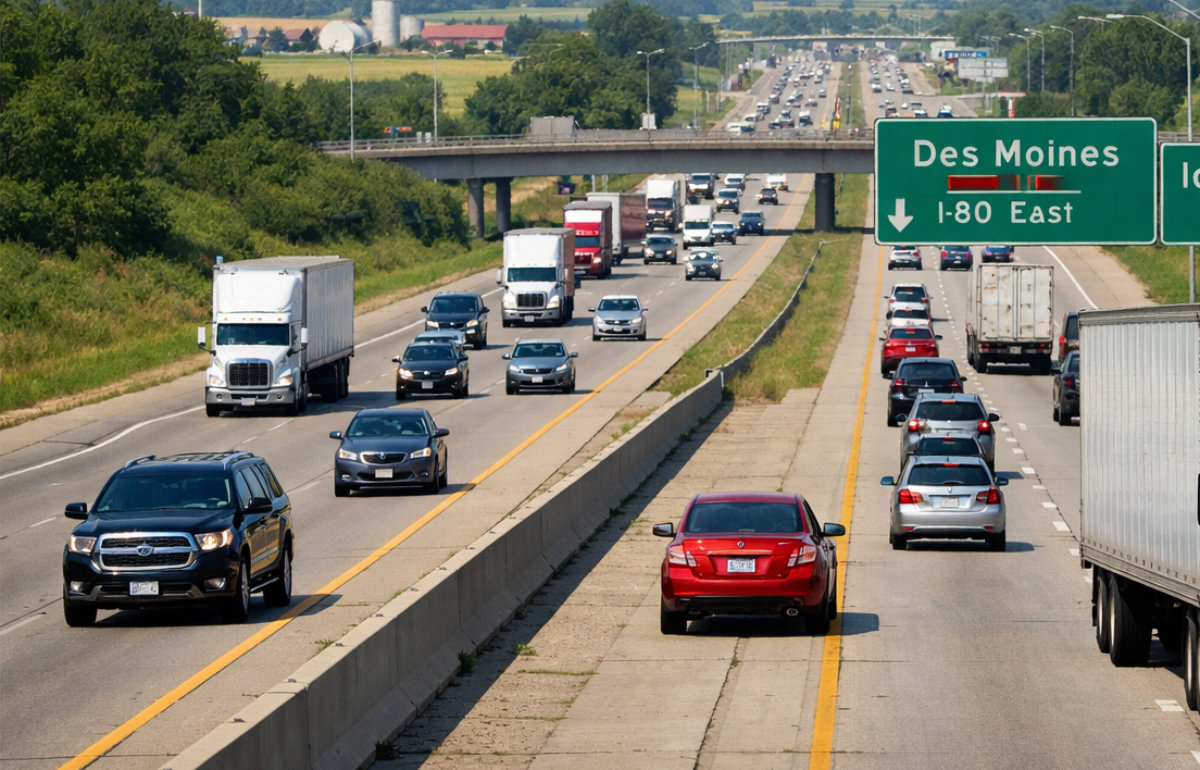
Iowa’s roadways made headlines in 2025 for a reason few expected but many welcomed. The state recorded its lowest number of traffic-related fatalities in modern history, a milestone that reflects years of effort from lawmakers, safety advocates, engineers, and everyday drivers. For communities across Iowa, this development represents progress that goes beyond statistics; it signals safer commutes, fewer families grieving sudden loss, and a shift toward more responsible driving culture.
Still, even in a year marked by improvement, serious crashes did not disappear. For our Iowa personal injury attorneys, this moment invites both recognition and realism. Safer roads matter, but when negligence leads to injury or death, the legal system remains a vital safeguard for accountability, recovery, and long-term security.
Injured in an Iowa motor vehicle accident? Reach out to a car accident attorney at Hauptman, O’Brien today. We serve Iowans through our offices in Council Bluffs and Sioux City. Call us today or contact us online for a free consultation.
What Drove the Decline in Traffic Fatalities Across Iowa
Several converging factors helped Iowa achieve its historic low in traffic deaths. Over the past decade, the state invested heavily in roadway design, enforcement strategies, and public awareness campaigns. These efforts gained traction in 2025 as newer safety standards became fully implemented across rural highways and urban corridors alike.
Infrastructure improvements played a quiet but significant role. Rumble strips, redesigned intersections, and improved lighting reduced the margin for catastrophic error. At the same time, law enforcement agencies refined data-driven patrol methods, focusing resources where severe crashes were most likely to occur.
Other contributors included:
- Expanded use of ignition interlock devices for repeat DUI offenders
- Stronger seat belt compliance through enforcement and education
- Hands-free law updates
- Increased public messaging around distracted driving
- Safer vehicle technology becoming more common on Iowa roads
These changes did not eliminate risk, but they reduced it meaningfully. From a legal perspective, they also raised expectations; when safety measures exist, drivers who ignore them may face greater scrutiny after a crash.
Iowa Traffic Safety Laws and Their Legal Impact
Iowa’s traffic safety progress cannot be separated from its legal framework. Over recent years, the state refined several statutes aimed at preventing high-risk behavior behind the wheel. Distracted driving laws, for example, now carry clearer prohibitions and penalties, making it easier to establish fault when a driver causes harm while texting or using a handheld device.
Speed enforcement also tightened in high-risk zones such as school areas and construction sites. When violations occur in these contexts, civil liability often follows criminal or administrative penalties. This overlap matters to injury victims, because a traffic citation can become persuasive evidence in a personal injury claim.
From a civil law standpoint, Iowa follows a modified comparative fault system. An injured person can recover damages only if they are found less than 51 percent at fault. This standard shapes how cases are investigated and negotiated, especially in complex crashes involving multiple vehicles.
Understanding these laws is critical after an accident. Even in a safer year, the legal consequences of a single bad decision can be severe, both for injured victims and the at-fault parties.
How Iowa’s Hands-Free Law Supports the Decline in Traffic Deaths
One factor contributing to Iowa’s historic reduction in traffic fatalities is the state’s strengthened approach to distracted driving. As of July 1, 2025, Iowa’s hands-free driving law makes it illegal for drivers to hold a phone while operating a vehicle. This change closed long-standing loopholes that once allowed drivers to scroll, dial, or handle devices as long as they were not actively texting.
From a safety standpoint, the law promotes full attention behind the wheel; from a legal standpoint, it clarifies responsibility after a crash. When a driver violates a clear statutory rule and causes harm, that violation can serve as strong evidence of negligence. Police reports, witness statements, and phone records now carry greater weight in these cases. For injured victims, this legal clarity often leads to faster claim resolution and more meaningful accountability, reinforcing the broader safety gains Iowa saw in 2025.
Why Fewer Fatalities Do Not Mean Fewer Serious Injuries
A decline in traffic deaths does not necessarily translate to fewer life-altering injuries. In fact, many crashes that once would have been fatal now result in catastrophic injuries due to improved emergency response and vehicle safety. Traumatic brain injuries, spinal cord damage, and severe orthopedic trauma remain common outcomes in high-speed collisions.
These cases often involve long-term medical care, lost earning capacity, and profound lifestyle changes. From a legal perspective, they are frequently more complex than wrongful death claims, requiring detailed medical evidence and expert testimony.
Common injury scenarios seen even in safer traffic years include:
- High-speed rural highway collisions
- Truck accidents involving underride or rollover dynamics
- Motorcycle crashes where helmets reduce fatalities but not severe injury
- Pedestrian and bicycle accidents in urban corridors
For injury victims, survival is only the beginning. The civil justice system exists to address the full scope of harm, not just the immediate outcome. That role remains essential regardless of statewide safety trends.
How a Personal Injury Claim Works After an Iowa Crash
When a serious accident occurs, the legal process follows a structured path. Understanding this process helps injured individuals protect their rights and avoid costly missteps. While each case is unique, most Iowa personal injury claims unfold in several key stages.
First comes the initial consultation, where an attorney reviews the facts, injuries, and potential liability. This stage is critical for preserving evidence and meeting deadlines. Iowa generally allows two years from the date of injury to file a personal injury lawsuit, although certain exceptions apply.
Next is the investigation phase. This may include accident reconstruction, medical record analysis, and witness interviews. Once liability is established, attorneys typically enter negotiations with insurance carriers.
If negotiations fail, litigation becomes necessary. At that point, the case may proceed through discovery, motions, and potentially trial. Settlement versus trial decisions often hinge on risk tolerance, evidence strength, and the insurer’s willingness to act reasonably.
The Role of Accountability in Building Safer Roads
Traffic safety improvements do not happen in a vacuum. Civil accountability plays a direct role in shaping safer behavior and corporate practices. When negligent drivers, trucking companies, or manufacturers are held financially responsible, it creates incentives to follow the rules and invest in safety.
Personal injury claims often uncover systemic issues, such as inadequate training, poor vehicle maintenance, or dangerous roadway design. These cases can lead to changes that benefit the broader public, even beyond the individual claimant.
From a community perspective, this accountability reinforces the progress reflected in Iowa’s 2025 numbers. Fewer deaths are a success, but lasting safety depends on consistent enforcement of both traffic laws and civil obligations.
In this sense, personal injury law complements public policy. One addresses prevention through rules and infrastructure; the other addresses consequences when those measures fail.
What Iowa’s 2025 Milestone Means for Accident Victims Going Forward
Iowa’s record-setting year offers optimism, but it also highlights a new reality. As safety improves, insurance companies often argue that serious injuries are less foreseeable or less severe. This can lead to more aggressive claim denials and lower settlement offers, even when injuries are clearly documented.
Victims may face delays, disputes over causation, or challenges minimizing long-term effects. Understanding the causes and effects behind these tactics is essential. A safer environment does not reduce the value of a legitimate claim; if anything, it underscores the abnormality and seriousness of negligent conduct.
In this evolving landscape, knowledgeable representation remains crucial. Legal advocacy ensures that progress in public safety does not come at the expense of individual rights.
Hauptman, O’Brien: Protecting Your Rights and Safeguarding Your Future
Iowa’s historic low in traffic deaths is worth recognizing, but it does not erase the impact of a serious crash on your life. If you or a loved one has been injured due to another party’s negligence, accountability still matters. Medical bills, lost income, and long-term recovery do not disappear because overall numbers improved.
Hauptman, O’Brien Personal Injury Lawyers understand both the legal system and the communities they serve across Iowa and Nebraska. With offices in Omaha, South Omaha, Bellevue, Lincoln, Council Bluffs, and Sioux City, the firm combines regional insight with over 268 years of combined legal experience.
If a traffic accident has disrupted your future, you deserve clear answers and strong advocacy. Protecting your rights and safeguarding your future starts with a conversation.
The car accident attorneys at Hauptman O’Brien are prepared to help you take the next step with confidence. Call us today at (712) 201-8131 or contact us online for a free consultation.


